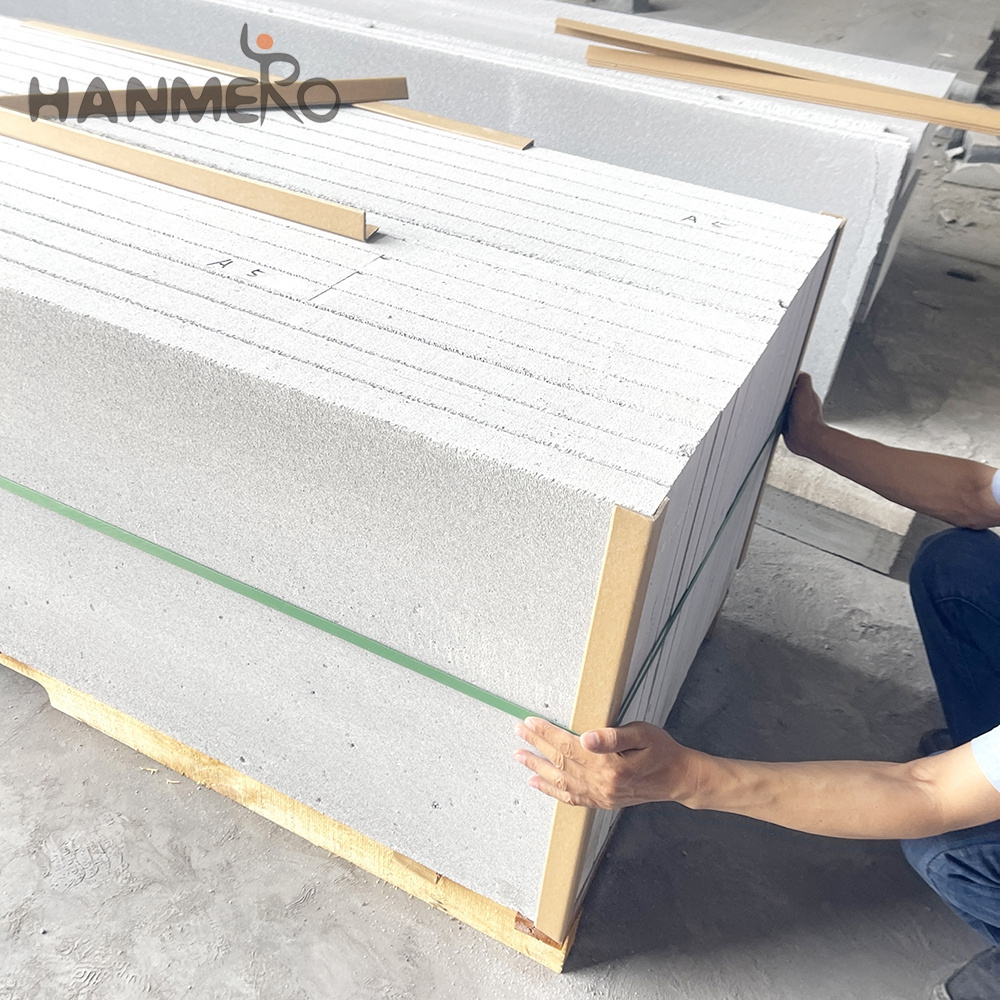
The future of building fire safety lies in the seamless integration of passive fire protection materials with active, intelligent detection systems. ALC (Autoclaved Aerated Concrete) wall panels are at the forefront of this evolution, uniquely positioned to serve as the physical backbone for smart building fire safety networks. Unlike traditional walls that are mere physical barriers, modern ALC panels can be pre-installed with conduits and mounting points for a variety of IoT (Internet of Things) fire safety devices, creating a truly intelligent fire defense system.
This integration begins during the design phase. The modular nature and easy machinability of ALC allow for the precise embedding of sensor cables and the creation of recesses for devices like thermal imaging cameras, smoke detectors, and acoustic alarms directly within the panel itself. This eliminates the need for unsightly surface-mounted conduits and protects sensitive wiring behind a fire-rated barrier. In the event of a fire, an ALC wall not only physically contains the blaze for 3+ hours but also provides a protected pathway for sensor data to flow, even as temperatures rise on the exposed side. This ensures that the building’s central fire safety AI continues to receive critical real-time data on fire location, temperature, and spread rate long after conventional systems might fail.
Furthermore, the thermal stability of ALC panels enhances sensor accuracy. While metal studs and gypsum can warp under heat, causing false alarms or sensor failure, ALC maintains its dimensional integrity. This allows integrated thermal sensors to provide reliable temperature readings, enabling the smart system to make more accurate predictions about fire behavior and optimize evacuation routes and firefighting response. The result is a synergistic system where the passive endurance of ALC buys crucial time, and the active intelligence of integrated sensors ensures that time is used with maximum efficiency to save lives and property.


