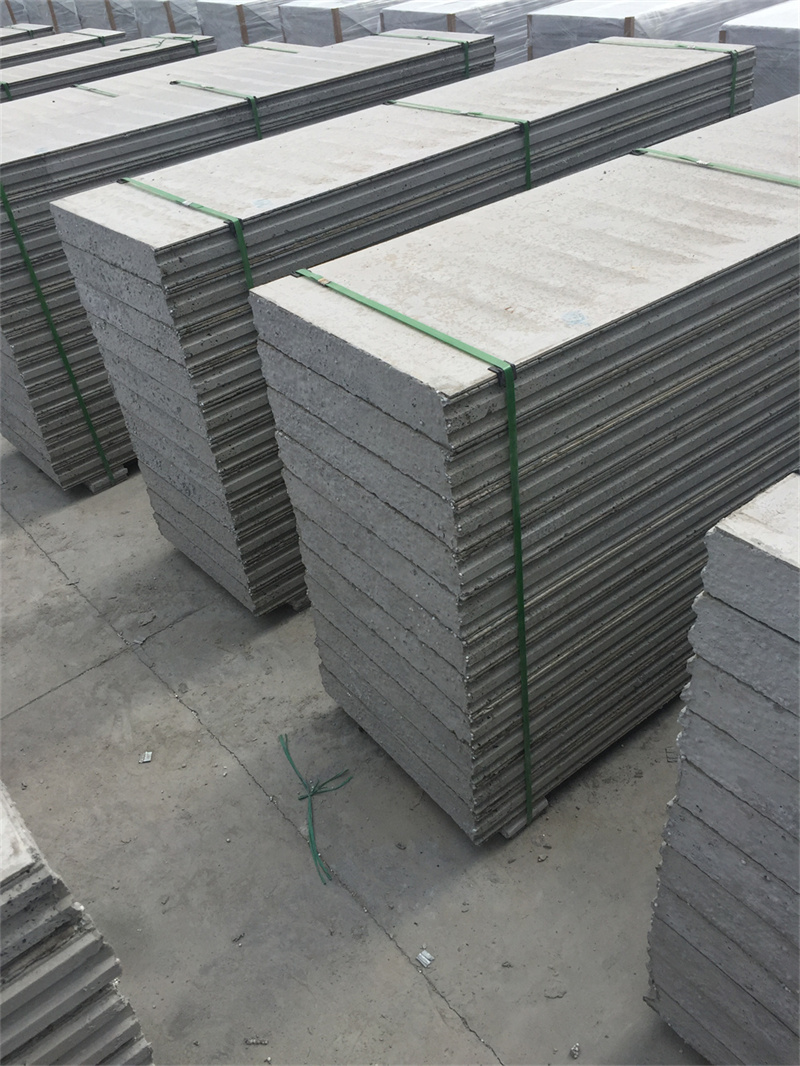
Introduction: The Critical Role of Thermal Insulation
As energy costs rise and climate change concerns intensify, thermal insulation has become one of the most important considerations in building design. In many countries, heating and cooling account for 40-60% of a building's total energy consumption. The wall system—the building's largest surface area—plays a decisive role in determining energy efficiency.
Thermal insulation wall panels, particularly those utilizing EPS (Expanded Polystyrene) cement sandwich technology, offer a highly effective solution. These panels combine structural integrity with exceptional thermal performance in a single, prefabricated product. This article provides a comprehensive analysis of how thermal insulation wall panels work, their energy-saving performance, and why they are increasingly specified for projects worldwide.
Understanding the science behind thermal insulation helps builders, developers, and homeowners make informed decisions that reduce both construction costs and long-term operational expenses.
1. The Science of Thermal Insulation1.1 How Heat Transfer Works
Heat naturally flows from warmer areas to cooler areas through three mechanisms:
1. Conduction: Heat transfer through solid materials
- Measured by thermal conductivity (k-value or λ-value)
- Lower k-value = better insulation
- Unit: W/m·K (Watts per meter-Kelvin)
2. Convection: Heat transfer through air or fluid movement
- Air gaps can either help (still air insulates) or hurt (moving air transfers heat)
- Proper sealing eliminates unwanted convection
3. Radiation: Heat transfer through electromagnetic waves
- Significant in hot climates with intense sun exposure
- Reflective surfaces can reduce radiant heat gain
1.2 Why EPS Provides Superior Insulation
EPS (Expanded Polystyrene) is an exceptionally effective insulating material due to its unique structure:
Physical Structure:
- Composed of 98% air, 2% polystyrene by volume
- Millions of tiny, closed-cell air pockets
- Air trapped in cells cannot circulate, eliminating convection
- Minimal solid material means minimal conduction path
Thermal Conductivity of Common Materials:
| Material | Thermal Conductivity (W/m·K) | Relative Performance |
|-----------------------------|------------------------------|----------------------|
| Steel | 50.0 | 694x worse than EPS |
| Concrete | 1.7 | 24x worse than EPS |
| Brick | 0.81 | 11x worse than EPS |
| Glass | 1.0 | 14x worse than EPS |
| Wood (softwood) | 0.13 | 1.8x worse than EPS |
| Mineral Wool | 0.035-0.040 | Similar to EPS |
| EPS (raw foam) | 0.032-0.038 | Baseline |
| EPS Cement Sandwich Panel | 0.045-0.095 | Excellent |
The EPS cement sandwich panel achieves its thermal performance through:
- The EPS-cement composite core (primary insulation layer)
- The air-tight facing board system (eliminates convection)
- The monolithic construction (no thermal bridges at joints)
2. Thermal Performance of EPS Wall Panels2.1 Thermal Conductivity by Panel Thickness
The thermal conductivity of EPS cement sandwich panels varies with thickness, as the proportion of insulating core increases relative to the facing boards.
Thermal Performance by Thickness:
| Panel Thickness | Thermal Conductivity (W/m·K) | R-Value (m²·K/W) | Equivalent Brick Wall |
|-----------------|------------------------------|------------------|-----------------------|
| 75mm | 0.095 | 0.79 | 400mm brick |
| 100mm | 0.072 | 1.39 | 600mm brick |
| 120mm | 0.062 | 1.94 | 750mm brick |
| 150mm | 0.055 | 2.73 | 900mm brick |
| 200mm | 0.045 | 4.44 | 1,400mm brick |
Note: R-Value measures resistance to heat flow; higher is better.
Note: Brick thermal conductivity assumed at 0.81 W/m·K
2.2 U-Value Comparison
U-Value (thermal transmittance) is the inverse of R-Value and is commonly used in building codes. Lower U-Value indicates better insulation.
U-Value Comparison (including surface resistances):
| Wall System | U-Value (W/m²·K) | Energy Rating |
|------------------------------------|------------------|---------------|
| 240mm brick wall (uninsulated) | 2.0 - 2.5 | Poor |
| 240mm brick + 50mm insulation | 0.5 - 0.6 | Good |
| 100mm EPS cement sandwich panel | 0.55 - 0.65 | Good |
| 150mm EPS cement sandwich panel | 0.35 - 0.40 | Excellent |
| 200mm EPS cement sandwich panel | 0.22 - 0.28 | Superior |
| Passive House standard | ≤ 0.15 | Ultra-low |
2.3 Thermal Bridge Elimination
One key advantage of EPS cement sandwich panels is the elimination of thermal bridges—localized areas of high heat transfer through structural elements.
Traditional Construction Thermal Bridges:
- Wall studs (wood or metal) transfer more heat than insulation
- Concrete columns and beams
- Window and door frames
- Metal ties in cavity walls
EPS Panel Advantage:
- Continuous insulating core across entire panel
- Tongue-and-groove joints designed to minimize heat transfer
- No metal fasteners that penetrate through both facing boards
- Uniform thermal performance across wall surface
Thermal Bridge Effect on Energy Loss:
| Construction Type | Thermal Bridge Loss | Additional Energy Required |
|-----------------------------|---------------------|----------------------------|
| Traditional stud wall | 15-25% | +15-25% heating/cooling |
| Cavity wall with ties | 5-10% | +5-10% heating/cooling |
| EPS sandwich panel | < 2% | Minimal |
3. Energy Saving Analysis3.1 Heating Energy Savings (Cold Climates)
In cold climates, heating is the dominant energy consumer. The following analysis demonstrates potential savings when using EPS wall panels instead of traditional uninsulated brick walls.
Assumptions:
- Location: Northern climate (e.g., Northern Europe, Canada, Northern China)
- Heating season: 6 months (180 days)
- Average indoor temperature: 20°C
- Average outdoor temperature during heating season: 0°C
- Wall area: 200 m²
- Heating system efficiency: 85%
Annual Heating Energy Comparison:
| Wall Type | U-Value | Heat Loss (kWh/year) | Cost ($0.15/kWh) | Savings vs. Brick |
|--------------------------|---------|----------------------|------------------|-------------------|
| 240mm brick (uninsulated)| 2.2 | 30,096 | $4,514 | Baseline |
| 100mm EPS panel | 0.60 | 8,208 | $1,231 | $3,283 (73%) |
| 150mm EPS panel | 0.38 | 5,198 | $780 | $3,734 (83%) |
| 200mm EPS panel | 0.25 | 3,420 | $513 | $4,001 (89%) |
Annual Heating Savings Summary:
| Panel Thickness | Annual Energy Saved | Annual Cost Saved | 20-Year Savings |
|-----------------|---------------------|-------------------|-----------------|
| 100mm | 21,888 kWh | $3,283 | $65,660 |
| 150mm | 24,898 kWh | $3,734 | $74,680 |
| 200mm | 26,676 kWh | $4,001 | $80,020 |
3.2 Cooling Energy Savings (Hot Climates)
In hot climates, cooling represents the major energy expense. EPS wall panels significantly reduce heat gain through walls.
Assumptions:
- Location: Hot climate (e.g., Middle East, Southeast Asia, Southern USA)
- Cooling season: 8 months (240 days)
- Average indoor temperature: 24°C
- Average outdoor temperature during cooling season: 32°C
- Wall area: 200 m²
- Cooling system COP (Coefficient of Performance): 3.0
Annual Cooling Energy Comparison:
| Wall Type | U-Value | Heat Gain (kWh/year) | Cooling Energy | Cost ($0.20/kWh) |
|--------------------------|---------|----------------------|----------------|------------------|
| 240mm brick (uninsulated)| 2.2 | 25,344 | 8,448 | $1,690 |
| 100mm EPS panel | 0.60 | 6,912 | 2,304 | $461 |
| 150mm EPS panel | 0.38 | 4,378 | 1,459 | $292 |
| 200mm EPS panel | 0.25 | 2,880 | 960 | $192 |
Annual Cooling Savings Summary:
| Panel Thickness | Annual Energy Saved | Annual Cost Saved | 20-Year Savings |
|-----------------|---------------------|-------------------|-----------------|
| 100mm | 6,144 kWh | $1,229 | $24,580 |
| 150mm | 6,989 kWh | $1,398 | $27,960 |
| 200mm | 7,488 kWh | $1,498 | $29,960 |
3.3 Combined Heating and Cooling Savings (Mixed Climates)
For temperate regions with both heating and cooling seasons, the combined savings are substantial.
Combined Annual Energy Savings (200 m² wall area):
| Panel Thickness | Heating Savings | Cooling Savings | Total Annual Savings | 20-Year Savings |
|-----------------|-----------------|-----------------|----------------------|-----------------|
| 100mm | $2,000 | $600 | $2,600 | $52,000 |
| 150mm | $2,300 | $700 | $3,000 | $60,000 |
| 200mm | $2,500 | $750 | $3,250 | $65,000 |
4. Thickness Comparison and Selection Guide4.1 Choosing the Right Thickness
Selecting the appropriate panel thickness depends on climate, building type, budget, and energy code requirements.
Recommended Thickness by Climate Zone:
| Climate Zone | Winter Temp | Summer Temp | Recommended Thickness |
|-----------------------|--------------|--------------|-----------------------|
| Tropical | > 15°C | 30-40°C | 75-100mm |
| Subtropical | 5-15°C | 30-35°C | 100mm |
| Temperate | 0-10°C | 25-30°C | 100-120mm |
| Cold Continental | -10 to 0°C | 20-28°C | 120-150mm |
| Subarctic | -20 to -10°C | 15-25°C | 150-200mm |
| Arctic | < -20°C | < 15°C | 200mm |
4.2 Return on Investment Analysis
Higher thickness panels cost more upfront but deliver greater energy savings. The following analysis shows payback periods.
ROI Analysis (200 m² wall area, cold climate):
| Panel Thickness | Additional Cost vs. 75mm | Annual Savings | Simple Payback |
|-----------------|--------------------------|----------------|----------------|
| 100mm | $1,200 | $400 | 3.0 years |
| 150mm | $3,000 | $700 | 4.3 years |
| 200mm | $5,500 | $950 | 5.8 years |
Recommendation:
- For most commercial and residential buildings, 100-150mm panels provide optimal cost-benefit balance
- For passive house or ultra-low energy buildings, 200mm panels are recommended
- For simple partition walls in conditioned spaces, 75mm is sufficient
5. Climate Adaptability5.1 Cold Climate Performance
In cold climates, EPS wall panels provide critical benefits:
Key Advantages:
- Prevents cold spots and condensation on interior walls
- Reduces heating system sizing requirements
- Improves occupant comfort (radiant temperature stability)
- Allows thinner walls compared to insulated brick construction
Cold Climate Case Study:
Location: Northern China (Heilongjiang Province)
- Winter design temperature: -28°C
- Building type: 3-story office building, 5,000 m²
- Wall system: 150mm EPS cement sandwich panels
- Results:
- Heating energy reduced by 78% vs. code minimum
- Heating system downsized by 40%
- Interior wall surface temperature remained above 17°C (vs. 12°C for uninsulated brick)
5.2 Hot Climate Performance
In hot climates, EPS wall panels reduce cooling loads and improve comfort:
Key Advantages:
- Reduces heat gain through walls by 70-85%
- Lowers peak cooling demand, allowing smaller HVAC systems
- Improves indoor comfort during power outages
- Reduces thermal shock from diurnal temperature swings
Hot Climate Case Study:
Location: Dubai, UAE
- Summer design temperature: 48°C
- Building type: Hotel, 120 rooms
- Wall system: 100mm EPS cement sandwich panels + exterior insulation
- Results:
- Cooling energy reduced by 42%
- Peak cooling demand reduced by 35%
- Indoor temperature rise during power outage: only 2°C/hour vs. 5°C/hour for conventional walls
5.3 Mixed Climate Performance
In temperate climates with both heating and cooling seasons:
Key Advantages:
- Reduces both heating and cooling energy consumption
- Improves comfort year-round
- Allows flexibility in HVAC system operation
- Provides stable indoor temperatures during seasonal transitions
Comparison Summary: Thermal Performance| Factor | 100mm EPS Panel | 150mm EPS Panel | 240mm Brick | 240mm Brick + Insulation |
|--------------------------|-----------------|-----------------|-------------|--------------------------|
| U-Value (W/m²·K) | 0.55-0.65 | 0.35-0.40 | 2.0-2.5 | 0.50-0.60 |
| R-Value (m²·K/W) | 1.39 | 2.73 | 0.40 | 1.67-2.00 |
| Annual Heating Savings | 73% | 83% | Baseline | 70-75% |
| Annual Cooling Savings | 73% | 83% | Baseline | 65-70% |
| Total Wall Thickness | 100mm | 150mm | 280mm | 290mm |
| Installation Speed | Fast | Fast | Slow | Slow |
| Thermal Bridges | Minimal | Minimal | Significant | Moderate |
| Dew Point Location | In insulation | In insulation | In wall | In insulation |
| Condensation Risk | Very Low | Very Low | High | Low |
FAQQ: What is the R-value of an EPS wall panel?
A: R-values range from 0.79 (75mm panel) to 4.44 (200mm panel). A 100mm EPS cement sandwich panel has an R-value of approximately 1.39 m²·K/W, equivalent to a 600mm thick brick wall.
Q: How does EPS insulation compare to mineral wool or fiberglass?
A: EPS has similar thermal conductivity to mineral wool and fiberglass (0.032-0.038 W/m·K for raw EPS vs. 0.035-0.040 for mineral wool). However, EPS cement sandwich panels provide both structure and insulation in one product, eliminating thermal bridges common in stud-frame construction with cavity insulation.
Q: Do EPS wall panels help with air conditioning costs?
A: Yes, significantly. By reducing heat gain through walls by 70-85%, EPS panels can reduce cooling energy consumption by 30-50% compared to uninsulated walls, depending on climate and building type.
Q: Are thicker panels always better for insulation?
A: Generally yes, but there are diminishing returns. Moving from 100mm to 150mm provides significant improvement, but from 150mm to 200mm provides smaller incremental benefits. For most applications, 100-150mm offers the best cost-benefit ratio.
Q: Can EPS wall panels be used for passive house construction?
A: Yes, with appropriate thickness (typically 200mm or greater) and attention to detailing around windows, doors, and junctions. EPS panels can meet or exceed passive house wall requirements of U ≤ 0.15 W/m²·K when combined with additional insulation layers.
Q: Do EPS wall panels prevent condensation problems?
A: Yes. The warm-side facing board stays above dew point temperature in most conditions, preventing condensation on interior surfaces. Additionally, the panel construction eliminates cold spots where condensation typically occurs in traditional walls.
Q: How do EPS wall panels perform in humid tropical climates?
A: Excellent. The panels reduce heat gain, improve dehumidification efficiency (since less cooling is needed), and resist moisture absorption. The inorganic facing boards do not support mold growth.
Q: What is the typical payback period for investing in thicker insulation panels?
A: In cold climates, upgrading from 75mm to 100mm typically pays back in 2-3 years. Upgrading to 150mm pays back in 4-5 years. In hot climates, payback periods are similar due to cooling energy savings.