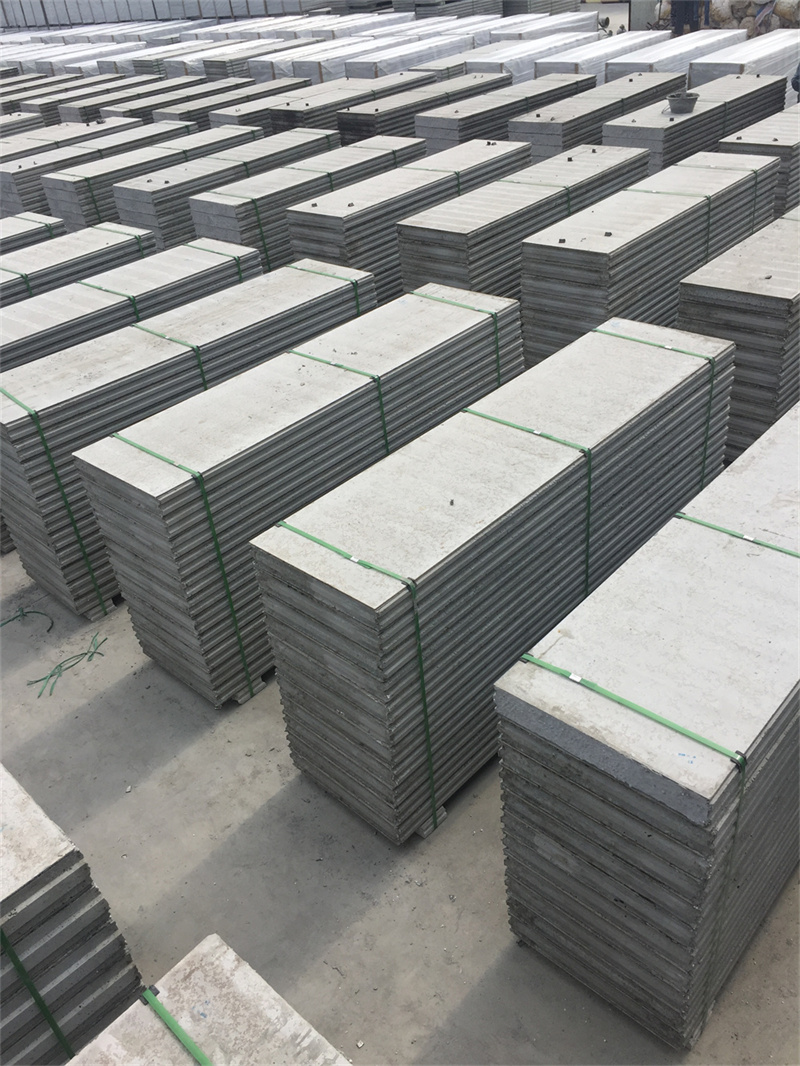
Introduction: Understanding EPS Cement Sandwich Panels
The construction industry is constantly evolving, and new materials are reshaping how we build. Among the most impactful innovations of the past two decades is the EPS cement sandwich panel—a composite wall system that combines strength, insulation, and speed of installation in a single product.
Whether you are a developer planning a multi-story residential project, a contractor looking for faster building methods, or an architect seeking sustainable materials, understanding what an EPS cement sandwich panel is and how it works is essential. This complete guide covers everything from the panel's basic definition and structural composition to its specifications, core advantages, and real-world applications.
1. What is an EPS Cement Sandwich Panel?An EPS cement sandwich panel is a prefabricated, composite building panel consisting of two outer layers of fiber-reinforced calcium silicate or cement board and a core layer of expanded polystyrene (EPS) beads mixed with cement, sand, and additives. The three layers are bonded together under high pressure and temperature in a factory setting, creating a single, monolithic panel that serves as both a structural wall element and an insulating barrier.
The term "sandwich" refers to the layered structure: the rigid facing boards on the outside (like bread) enclose the lightweight insulating core (like the filling). This design draws on the engineering principle that a sandwich structure is far stronger and stiffer than the sum of its individual layers—a principle widely used in aerospace and automotive engineering, now applied to construction.
Key Definition Points:
- Prefabricated: manufactured in a factory, delivered ready to install
- Composite: multiple materials combined for superior overall performance
- Monolithic: layers are permanently bonded, cannot delaminate
- Multi-functional: provides structure, insulation, fire resistance, and sound proofing in one product
2. Structural Composition and MaterialsUnderstanding what goes into an EPS cement sandwich panel helps explain its remarkable performance characteristics. Each component plays a specific role.
Outer Facing Boards (Calcium Silicate Board)
- Material: Fiber-reinforced calcium silicate board
- Thickness: Typically 5mm per side
- Density: 1,000-1,200 kg/m³
- Function: Provides structural rigidity, impact resistance, fire protection, and a smooth surface for finishing
The facing boards are made from a mixture of calcium silicate, cellulose fibers, and other reinforcing agents. They are autoclaved (cured under high-pressure steam) to achieve exceptional hardness, dimensional stability, and moisture resistance. These boards are classified as Class A1 non-combustible materials, meaning they will not burn, emit toxic gases, or contribute to flame spread under any circumstances.
Core Layer (EPS Cement Composite)
- Materials: Expanded polystyrene (EPS) beads, Portland cement, fine sand, water, and chemical additives
- EPS bead density: 10-20 kg/m³
- Core density: 350-500 kg/m³ (depending on formulation)
- Function: Provides thermal insulation, sound absorption, and weight reduction while maintaining structural integrity
The EPS beads used in the core are expanded polystyrene granules, similar to those used in packaging but treated for construction-grade performance. They are mixed into a cement-sand slurry with proprietary additives that improve bonding, water resistance, and fire retardancy. The resulting composite core is lightweight yet structurally robust—it does not crumble, compress, or degrade under normal building loads.
Bonding System
- The facing boards and core are bonded together during the manufacturing process under high pressure
- The cement slurry from the core penetrates the porous surface of the facing boards, creating a mechanical interlock
- This bond is permanent—delamination is impossible under normal conditions
- No adhesives are used; the bond is purely cementitious
3. Specifications and ParametersThe following tables summarize the standard specifications for EPS cement sandwich panels.
Standard Dimensions:
| Parameter | Standard Range | Notes |
|------------------|----------------------|--------------------------------|
| Length | 2,440 - 3,000 mm | Custom lengths up to 4,000 mm |
| Width | 610 mm | Standard; 600 mm also available|
| Thickness | 75, 100, 120, 150, 200 mm | Most common: 100mm and 150mm |
Physical Properties:
| Property | 75mm | 100mm | 150mm | 200mm |
|---------------------------|---------|---------|---------|---------|
| Weight (kg/m²) | 45-50 | 55-60 | 75-85 | 95-110 |
| Thermal Conductivity (W/m·K)| 0.095 | 0.072 | 0.055 | 0.045 |
| Sound Insulation (dB) | 35-38 | 40-42 | 46-48 | 50-52 |
| Fire Resistance (hours) | 2-3 | 3-4 | 4+ | 4+ |
| Compressive Strength (MPa)| 3.5-4.5 | 3.5-4.5 | 3.5-4.5 | 3.5-4.5 |
| Water Absorption (%) | <8 | <8 | <8 | <8 |
Mechanical Properties:
| Property | Value |
|-----------------------------|-------------------|
| Bending Strength | ≥ 7.5 MPa |
| Impact Resistance | ≥ 5 times (10kg sandbag) |
| Hanging Strength (single point) | ≥ 500 N |
| Surface Hardness | ≥ 50 HB |
4. Core Advantages4.1 Lightweight but Strong
At only 55-60 kg/m² for a 100mm panel (compared to 350-450 kg/m² for a 240mm brick wall), EPS cement sandwich panels reduce the dead load on buildings by up to 85%. Despite this lightness, they maintain excellent compressive and bending strength, making them suitable for both partition and exterior wall applications.
4.2 Rapid Installation
A 3-person team can install 50-80 m² of panels per day, compared to just 5-8 m² for a brick mason. The tongue-and-groove edge design ensures panels fit together precisely, reducing installation errors and the need for skilled labor.
4.3 Superior Fire Resistance
Classified as Class A1 non-combustible, EPS cement sandwich panels can withstand fire for 4+ hours (150mm and above). The cement matrix fully encapsulates the EPS beads, preventing oxygen from reaching them and ensuring the core does not ignite.
4.4 Excellent Thermal Insulation
The EPS-cement composite core provides thermal conductivity as low as 0.045 W/m·K for 200mm panels—up to 18 times better than solid brick. A 100mm panel provides insulation equivalent to a 600mm brick wall.
4.5 Outstanding Sound Insulation
The multi-density sandwich structure effectively blocks sound transmission across frequencies. A 100mm panel achieves 40-42 dB sound reduction, suitable for hotel partitions and office walls.
4.6 Water and Moisture Resistance
With water absorption below 8%, EPS cement sandwich panels maintain their structural integrity in humid environments. Unlike gypsum drywall, they do not soften, swell, or disintegrate when exposed to moisture.
4.7 Space Efficiency
A 100mm EPS panel replaces a 240mm brick wall plus 20mm plaster on each side (280mm total). This saves 180mm of wall thickness per wall, translating to 4-6% more usable floor area in a typical building.
4.8 Environmental Sustainability
EPS cement sandwich panels contain zero formaldehyde, zero asbestos, and zero VOCs. They reduce construction waste, lower building energy consumption by 30-50%, and contribute to green building certifications such as LEED and BREEAM.
5. Manufacturing ProcessUnderstanding how EPS cement sandwich panels are made provides insight into their quality and consistency.
5.1 Raw Material Preparation
The manufacturing process begins with the careful selection and preparation of raw materials:
Facing Board Materials:
- Calcium silicate powder, cellulose fibers, and water are mixed into a slurry
- The slurry is poured onto forming belts and compressed to the required thickness
- Boards are autoclaved at 180°C under 1.0-1.2 MPa steam pressure for 8-12 hours
- After autoclaving, boards are dried, trimmed, and inspected for quality
EPS Bead Preparation:
- Raw polystyrene beads are pre-expanded using steam
- Beads are aged for 12-24 hours to stabilize their dimensions
- Beads are sorted by size (typically 3-5mm diameter for optimal core performance)
5.2 Panel Forming Process
The core material is prepared by mixing:
- Pre-expanded EPS beads
- Portland cement (grade 42.5 or higher)
- Fine silica sand
- Proprietary chemical additives (water reducers, water repellents, fire retardants)
- Water at a precisely controlled ratio
The forming process follows these steps:
Step 1: Bottom Facing Board Placement
- A calcium silicate board is placed on the production line
- The board surface is lightly moistened to improve core adhesion
Step 2: Core Material Distribution
- The EPS-cement slurry is evenly distributed over the bottom board
- The mixture is leveled to achieve uniform thickness
- The slurry fills the board's surface pores, creating a mechanical bond
Step 3: Top Facing Board Placement
- A second calcium silicate board is placed on top of the core
- The sandwich is pressed together under controlled pressure
Step 4: Curing
- Panels are cured at controlled temperature and humidity for 24-48 hours
- The cement in the core hydrates and gains strength
- The mechanical bond between core and facing boards becomes permanent
Step 5: Finishing and Quality Control
- Panels are trimmed to exact dimensions
- Edge profiles (tongue-and-groove) are formed
- Each panel is inspected for dimensional accuracy, surface quality, and core integrity
- Panels are stacked and packaged for shipping
5.3 Quality Control Standards
Reputable manufacturers maintain strict quality control throughout the process:
| Inspection Point | Test Method | Acceptance Criteria |
|---------------------------|--------------------------------|------------------------------|
| Raw materials | Lab testing | Per specification |
| Facing board density | Weigh and measure | 1,000-1,200 kg/m³ |
| Core density | Core sample testing | 350-500 kg/m³ |
| Bond strength | Peel test | No delamination at 150N |
| Panel dimensions | Laser measurement | ±2mm length, ±1mm thickness |
| Surface flatness | Straight edge | < 1mm deviation per 2m |
| Compressive strength | Universal testing machine | ≥ 3.5 MPa |
| Fire resistance | Furnace test | Class A1 |
Manufacturing Capacity:
- A standard production line produces 1,500-3,000 m² of panels per day
- Panels can be produced in continuous lengths or cut to custom sizes
- Typical lead time for standard orders: 7-14 days
- Custom thicknesses and lengths: 14-21 days
6. Application ScenariosResidential Construction
- Interior partition walls in apartments and houses
- Exterior walls for low-rise residential buildings
- Renovation and addition projects (lightweight, no overloading)
Commercial Buildings
- Hotel room partitions
- Office partition walls
- Shopping mall interior walls
- Restaurant and café partitions
Industrial and Institutional
- Factory partition walls
- Warehouse interior divisions
- Hospital and clinic walls
- School classroom partitions
Prefabricated and Modular Buildings
- Modular housing units
- Prefabricated site offices and dormitories
- Container home modifications
- Temporary and semi-permanent structures
Special Applications
- Sound-rated walls (studios, conference rooms)
- Fire-rated walls (stairwells, corridors)
- Wet area walls (bathrooms, kitchens, laundries)
- Exterior cladding and façade systems
Comparison: EPS Cement Sandwich Panel vs. Traditional Materials| Feature | EPS Cement Sandwich Panel | Brick Wall | Drywall Partition |
|------------------------|---------------------------|------------|-------------------|
| Weight (per m²) | 55-60 kg | 350-450 kg | 25-35 kg |
| Installation Speed | 50-80 m²/day | 5-8 m²/day | 40-60 m²/day |
| Fire Rating | Class A1, 4+ hours | Class A1 | Class A2, 1-2 hrs |
| Thermal Conductivity | 0.072 W/m·K | 0.81 W/m·K | 0.17 W/m·K |
| Sound Insulation | 40-42 dB (100mm) | 45-48 dB | 30-38 dB |
| Water Resistance | Excellent | Good | Poor |
| Plastering Required | No | Yes | No |
| Total Wall Thickness | 100mm | 280mm | 100-125mm |
| Lifespan | 50+ years | 50+ years | 15-25 years |
| Total Installed Cost | Low | Medium | Medium |
FAQQ: What does EPS stand for in EPS cement sandwich panel?
A: EPS stands for Expanded Polystyrene—a lightweight, closed-cell foam material made from polystyrene beads. In the panel, EPS beads are mixed with cement to create a composite core that provides thermal insulation while maintaining structural integrity.
Q: Is the EPS core safe in case of fire?
A: Yes. The EPS beads are fully encapsulated within the cement matrix, which prevents oxygen from reaching them. The facing boards are Class A1 non-combustible. Even under direct fire exposure, the panel maintains structural integrity for 4+ hours (150mm+ thickness).
Q: Can EPS cement sandwich panels be used for load-bearing walls?
A: Standard EPS cement sandwich panels are designed primarily for partition walls and non-load-bearing applications. For load-bearing wall applications, specially engineered panels with additional reinforcement are available. Always consult a structural engineer for load-bearing designs.
Q: How do EPS cement sandwich panels compare to traditional brick walls in cost?
A: While the material cost per square meter may be comparable or slightly higher, the total installed cost of EPS panels is typically 15-30% lower due to faster installation, no plastering requirement, reduced labor, and smaller foundation requirements.
Q: What finishes can be applied to EPS cement sandwich panels?
A: The smooth facing board surface accepts virtually any finish: painting, wallpaper, ceramic tiles, natural stone veneer, texture coatings, and more. No plastering or skim-coating is needed before finishing.
Q: Are EPS cement sandwich panels environmentally friendly?
A: Yes. They contain zero formaldehyde, zero asbestos, and zero VOC emissions. Buildings using these panels consume 30-50% less energy for heating and cooling. The panels also reduce construction waste and contribute to green building certifications like LEED and BREEAM.
Q: What is the typical lifespan of an EPS cement sandwich panel?
A: With proper installation and normal conditions, EPS cement sandwich panels have a lifespan of 50+ years, comparable to traditional masonry construction. The cement matrix protects the EPS core from degradation.
Q: Can EPS cement sandwich panels be used in earthquake-prone areas?
A: Yes. Their lightweight nature (up to 85% lighter than brick walls) actually improves seismic performance by reducing the building's overall mass and the resulting seismic forces on the structure.