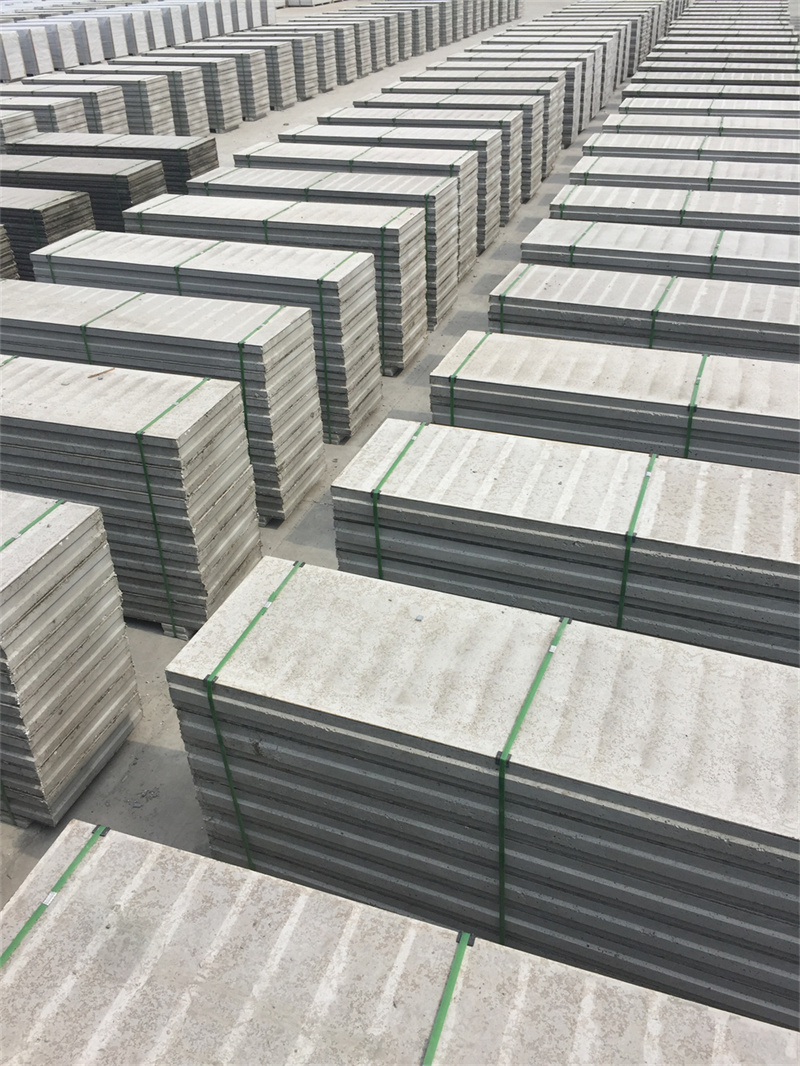
Beyond Traditional Bricks: EPS Cement Sandwich Panels Reshape Modern Construction
For many years, the construction industry has stuck to old building habits. Most projects still rely on heavy brick masonry and on-site manual work, long construction cycles and rising overall costs have become a common pain point for contractors and developers alike. Today, all of these outdated building methods are being replaced by EPS cement sandwich panels. Made with sturdy calcium silicate surface boards and a high-performance foam cement core, this prefabricated wall material does more than just replace traditional bricks. It completely changes the whole way modern buildings are designed and constructed on site.
No More On-Site Construction Uncertainties
The quality of a brick wall always depends entirely on the construction workers on site. Uneven mortar mixing, sloppy leveling and inconsistent bricklaying work will inevitably lead to wall cracks, dampness and extra repair costs in the later stage. Unlike brickwork built entirely on construction sites, all EPS sandwich panels are fully produced and quality-checked in a standardized factory workshop. Every panel comes as a finished integrated unit, with precise straightness, stable density and consistent overall quality. Once delivered to the construction site, workers only need to install them directly. Construction is no longer slow brick-by-brick laying, but simple and fast on-site assembly, helping all projects finish ahead of schedule without sacrificing wall quality.
Greatly Speed Up Construction and Cut Overall Project Costs
Construction efficiency directly determines the final profit of the project, and EPS panels bring obvious efficiency advantages. A skilled bricklayer can only finish about 15 square meters of brick wall per working day, and the work is physically demanding, with frequent material handling and repeated on-site adjustments required. With EPS cement sandwich panels, the same worker can easily install 33 to 35 square meters of wall every single day.
Each panel adopts a professional tongue-and-groove interlocking structure, which connects tightly together just like building blocks. The faster installation not only greatly reduces labor expenses, but also cuts down various site overheads. Building envelopes can be completed weeks earlier than traditional brick construction, which effectively saves costs on equipment rental, on-site management, security and construction loan interest. Every day saved on the construction period directly turns into real profit for developers and contractors.
Built-In Excellent Performance, No Need for Extra Auxiliary Works
Traditional brick buildings need separate thermal insulation construction by additional teams to achieve energy-saving effects, which increases both construction time and extra budget. EPS sandwich panels integrate thermal insulation function inside the core material during production, no secondary insulation work is needed at all. Ordinary brick walls easily absorb external heat and cold, and transfer indoor and outdoor temperature mutually, resulting in high air conditioning and heating bills all year round. The special EPS core forms a stable thermal insulation barrier, reducing the long-term building energy consumption by nearly half.
Besides energy efficiency, fire resistance, sound insulation and moisture resistance are all built-in basic performances of the panels, no expensive extra treatment required:
Fire Safety Performance: The panels reach A2 non-combustible grade. They will not crack, spall or collapse under high-temperature fire conditions, and can always maintain stable structural safety for the building.
Sound Insulation Effect: The composite sandwich core can effectively absorb and block noise, reducing 40 to 45 decibels of external sound. It is very suitable for residential buildings, apartments and other projects requiring high living comfort and quiet environment.
Moisture and Mold Resistance: The panel material itself is hydrophobic, and the interlocking installation leaves no splicing gaps. It fundamentally avoids wall dampness, water seepage and mold problems that often occur in traditional porous brick walls.
Maximize Usable Indoor Building Space
In urban areas with tight land resources, every square meter of building space is extremely valuable. Traditional brick walls plus internal and external plastering usually reach a total thickness of 240 millimeters. EPS sandwich panels only need 75 to 100 millimeters in thickness, yet provide stronger and more stable structural performance. For the whole building floor plan, the thinner wall design saves a lot of occupied space and adds dozens of square meters of extra usable and salable area. Choosing better wall materials simply creates more practical space and higher economic value for property owners.
Final Conclusion
Choosing EPS cement sandwich panels is a practical and future-oriented building decision. The panels are recyclable, resistant to level 8 earthquake impact, and need no plastering or mortar during the whole construction process. Nowadays, construction labor is becoming increasingly scarce and energy costs keep rising. Continuing to stick to old brick construction methods is not tradition, but a clear competitive disadvantage. EPS sandwich panels are more than just a new type of wall material — they represent the simpler, faster and more profitable way to build all modern buildings.