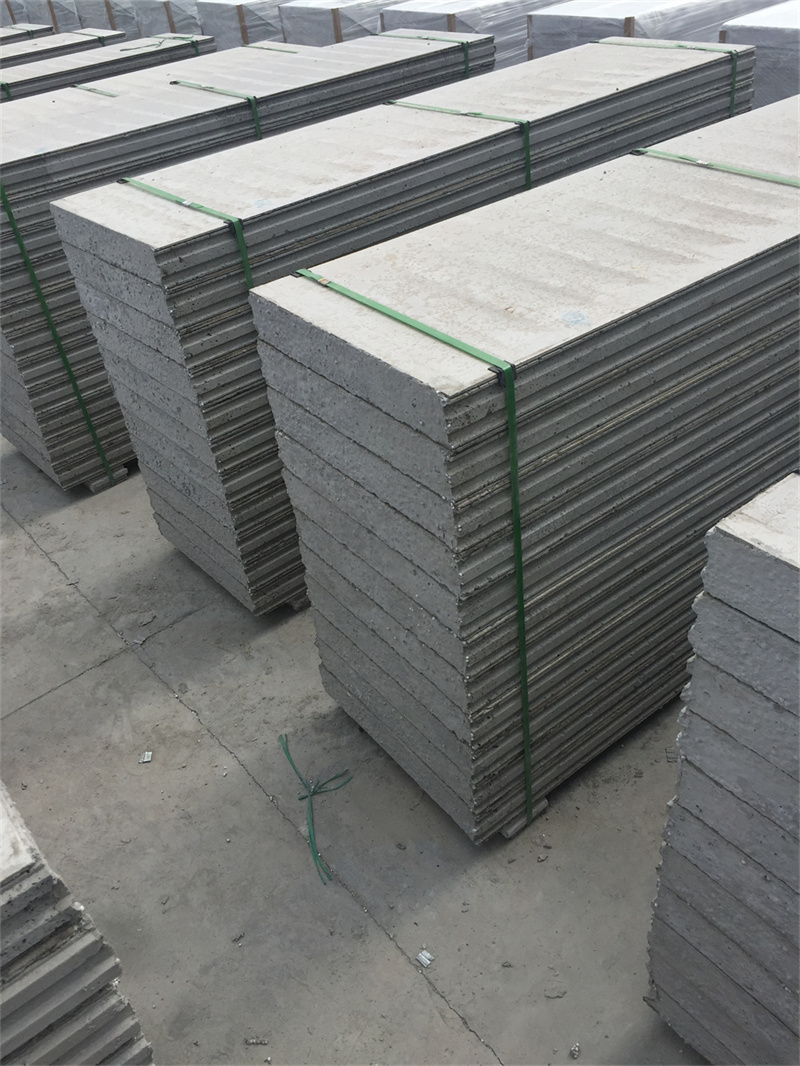
Controlling airborne noise transfer between commercial office spaces, hotel suites, and multi-family residential units is a key requirement for modern interior design. Utilizing a high-performance soundproof EPS wall panel configuration provides an advanced acoustic boundary that efficiently dampens sound energy across a broad spectrum of frequencies.
Unlike homogenous solid walls that easily transfer sound through direct vibration, these advanced composite panels employ the Mass-Air-Mass acoustic isolation principle:
Sound Waves ===> [High-Density Outer Face] -> [Microscopic Air Pockets in Core] -> [Second Outer Face]
(Reflects High Frequencies) (Dampens & Absorbs Vibrations) (Blocks Residual Energy)
The dense outer calcium silicate boards reflect high-frequency sounds, while the interior core—composed of a complex mix of cement and expanded polystyrene beads—acts as an acoustic sponge. The microscopic air pockets within the core break up and scatter low-frequency sound vibrations, preventing them from passing through the wall. This design achieves sound transmission loss ratings of 38dB to over 46dB, successfully creating quiet, private interior spaces.


