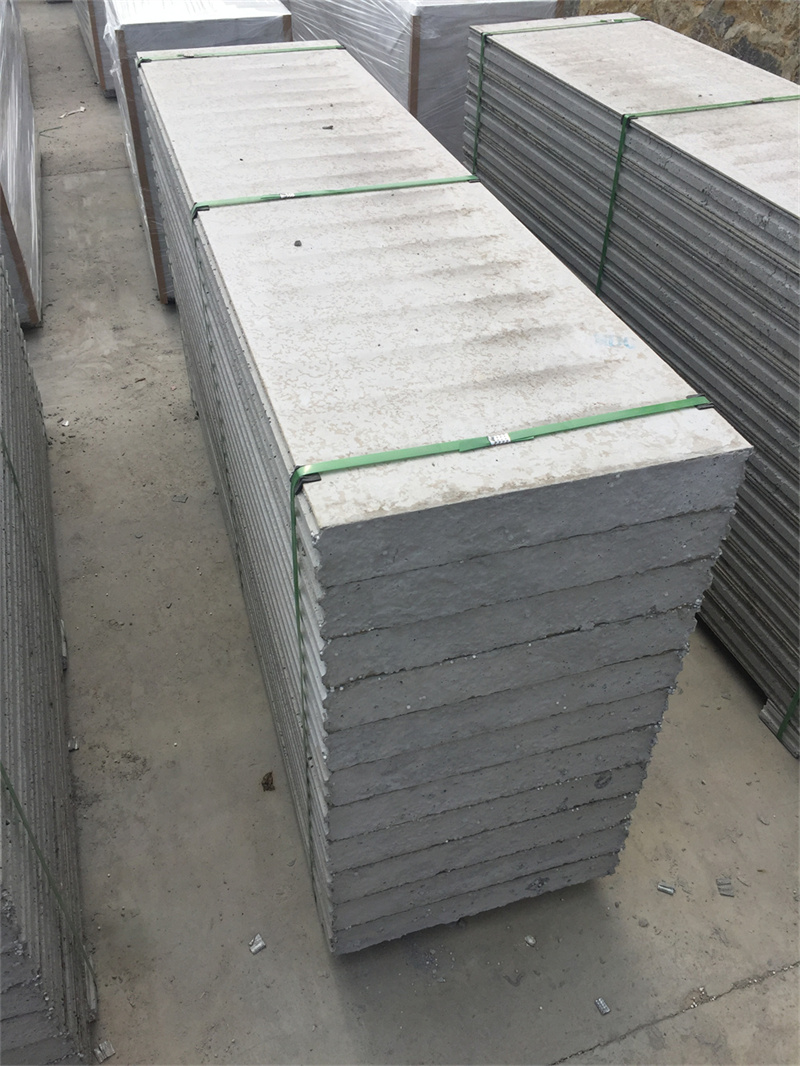
When evaluating wall construction materials, performance isn't just about structural support—it’s about safety, comfort, energy efficiency, and long-term cost. EPS cement sandwich wall panels have earned global recognition because they hit all these performance metrics at once.
Let's break down the core functions and technical advantages that make these panels a staple of modern green building.
Energy conservation is no longer optional; it’s a standard building code requirement.
How It Works: The embedded EPS (expanded polystyrene) beads act as an array of tiny air pockets that block thermal conductivity.
The Result: Buildings constructed with EPS panels consume significantly less energy for heating and air conditioning, lowering electricity bills for property owners year-round.
Safety is paramount in any building design.
Performance: The high-density fiber-cement or calcium silicate facings combined with inorganic cement in the core provide excellent fire retardation. Most standard EPS sandwich panels carry a Class A non-combustible fire rating, maintaining structural integrity for up to 3-4 hours at 1000°C
Fire Rating: Class A Non-Combustible Duration: Up to 3-4 Hours
In humid regions or moisture-prone areas (like basements, bathrooms, and kitchens), traditional drywall degrades and brickwork can suffer from dampness and mold growth.
Performance: EPS cement panels do not absorb water easily. The core material prevents capillary moisture migration, meaning the panels won't swell, peel, or lose strength in damp environments.
Urban noise pollution is a major complaint in residential and commercial spaces.
Performance: With sound insulation values typically ranging between 38 dB and 50+ dB, these panels effectively dampen ambient sound waves. They meet strict acoustic requirements for hotels, hospitals, and multi-family residential complexes.
During seismic activity, heavy brick walls are prone to cracking and collapsing, posing serious safety hazards.
Performance: EPS panels utilize a steel bar/mortar joint interlocking design that allows slight flexibility under shear stress. Combined with their low weight, they significantly reduce earthquake damage impact on the overall building structure.
Space optimization directly impacts real estate value.
Performance: Because EPS sandwich panels (typically 75mm–150mm thick) provide structural strength and insulation superior to a 120mm–240mm traditional brick wall, using them thins out the wall footprint—increasing indoor usable space by 3% to 5%.
Key Performance Summary
| Feature | EPS Cement Sandwich Panel | Traditional Red Brick |
| Weight | Lightweight (~45–75 kg/m²) | Heavy (~180–250 kg/m²) |
| Installation Speed | Fast (Interlocking System) | Slow (Wet Masonry Work) |
| Fire Resistance | Up to 4 hours | Variable |
| Thermal Insulation | Excellent | Poor |
| Usable Space Gain | +3% to +5% | Baseline |
Choosing EPS cement sandwich wall panels means choosing a safer, quieter, warmer, and more cost-efficient building. Upgrading your wall system is one of the smartest investments you can make for project longevity.


