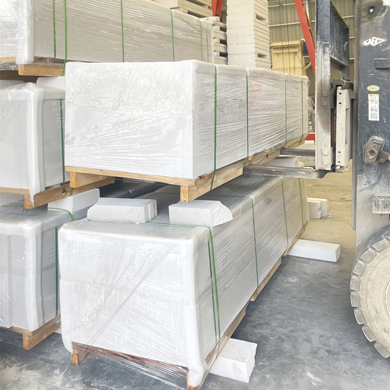
When designing fire-safe commercial buildings, architects and contractors are increasingly turning to ALC (Autoclaved Aerated Concrete) wall panels as a superior alternative to conventional fire-rated gypsum board. Unlike standard drywall that relies on bound water molecules to resist fire—eventually dehydrating and losing structural integrity under sustained flame exposure—ALC panels are manufactured from silica sand, cement, lime and aluminum powder, cured under high-temperature high-pressure steam to achieve a solid A1-class non-combustible rating.
A 100mm thick ALC wall panel delivers a minimum 3-hour fire resistance rating, far exceeding the 1-2 hour performance of most standard gypsum assemblies. This critical difference means that in the event of a building fire, ALC walls will maintain their full structural shape and integrity without spalling, collapsing or releasing flammable gases. For commercial properties including retail centers, office towers and industrial warehouses, this extended fire resistance window gives occupants far more time to safely evacuate, while also protecting structural steel beams and columns from heat-induced deformation that can cause total building collapse.
Unlike composite cladding materials that may contain organic binders or polyethylene cores, ALC wall panels produce zero toxic smoke or flaming droplets during a fire. This low-smoke characteristic is a life-saving feature: statistics show that over 60% of fire-related fatalities are caused by smoke inhalation rather than direct flame contact. By eliminating smoke-producing materials from wall assemblies, ALC panels help maintain clear escape routes and improve visibility for first responders entering the building.


