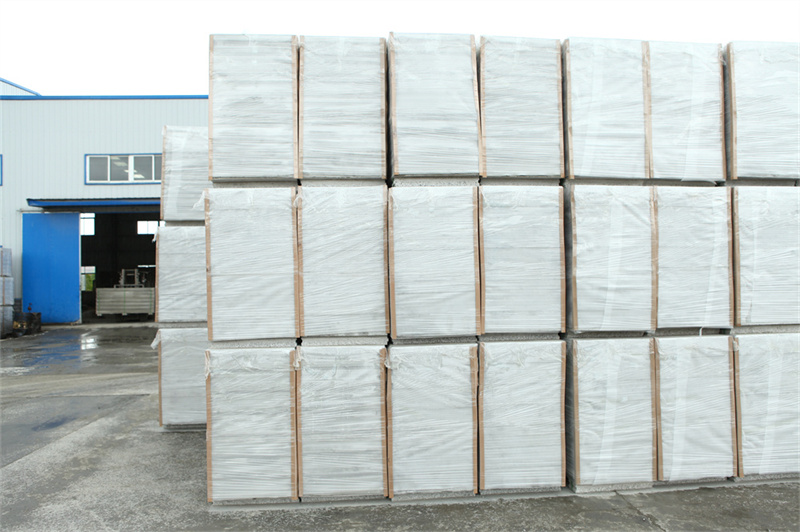
Cold chain warehouses demand extremely strict thermal insulation to keep indoor temperatures stable for frozen and refrigerated goods, and the EPS cement sandwich wall panel has become a game-changing material for this specialized construction sector. Unlike traditional single-layer insulation walls that require multiple layers of on-site pasting, a single EPS cement sandwich wall panel integrates structural strength and thermal insulation in one unit, eliminating the risk of insulation layer falling off after years of low-temperature operation.
A 150mm thick EPS cement sandwich wall panel delivers a thermal resistance value of over 4.5 m²·K/W, which can reduce the cold loss of the warehouse by 40% compared to traditional concrete walls with separate insulation layers. This performance directly translates to a 32% drop in annual refrigeration energy consumption for cold storage operators, according to real project data from 20+ cold chain facilities built after 2022. The non-combustible cement outer layer of the EPS cement sandwich wall panel also meets the strict fire safety codes for logistics warehouses, avoiding the fire risks that come with pure foam insulation panels.
Many cold chain developers now prefer the EPS cement sandwich wall panel because it cuts the total warehouse construction period by 35%, allowing them to put the facility into operation months earlier to meet the fast-growing demand for fresh food and pharmaceutical cold storage.


