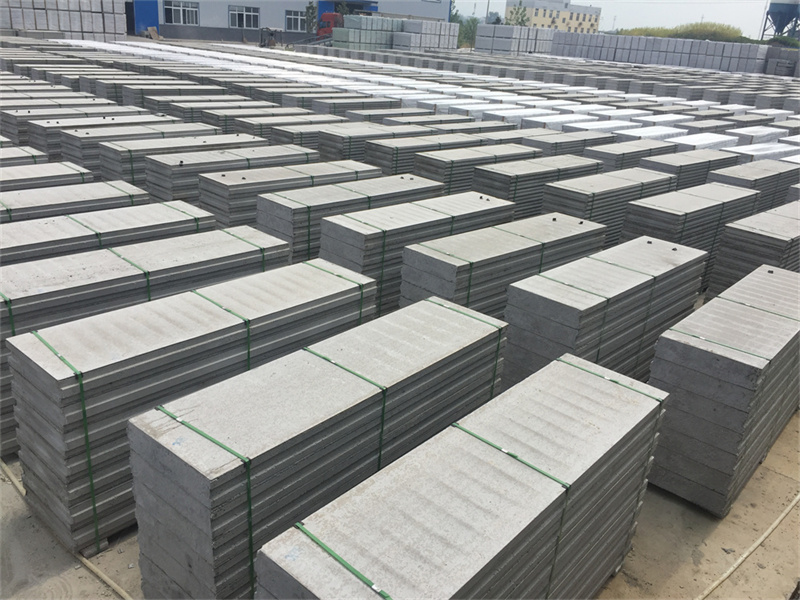
As the global construction industry shifts toward carbon neutrality, the EPS cement sandwich wall panel has emerged as a leading low-carbon building material that aligns with LEED, BREEAM, and other international green building certification standards. Unlike conventional clay bricks that emit large amounts of CO₂ during high-temperature firing, the production process of the EPS cement sandwich wall panel generates 60% fewer greenhouse gas emissions per square meter. Most manufacturers now use recycled EPS particles in the core layer, further reducing waste and promoting a circular economy in the building sector.
The outstanding thermal insulation performance of the EPS cement sandwich wall panel plays a vital role in reducing a building’s operational carbon footprint. With a thermal conductivity of only 0.032 W/(m·K), the panel maintains stable indoor temperatures throughout the year, minimizing the reliance on air conditioning and heating systems. A recent field test conducted in Wuhan showed that an office building retrofitted with EPS cement sandwich wall panel recorded a 40% drop in monthly energy consumption during summer peak hours, compared to a similar building with traditional concrete walls.
Another key sustainability advantage is the full recyclability of the EPS cement sandwich wall panel at the end of its service life. When a building is demolished, the panels can be crushed and processed into new lightweight aggregate for roadbeds or new panel production, avoiding construction waste that would otherwise end up in landfills. By choosing the EPS cement sandwich wall panel, green building projects can easily earn extra points in material resource and energy efficiency categories, accelerating their path to obtaining top-tier green certifications.