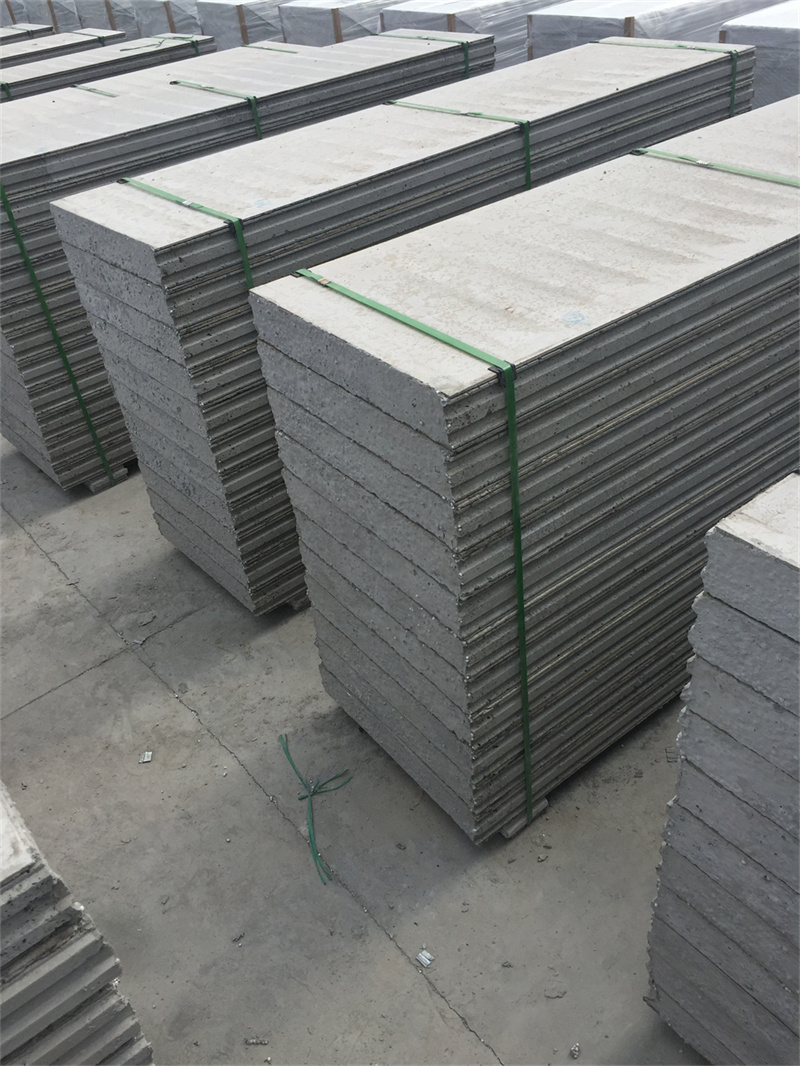
Many architects and contractors still debate whether to choose EPS cement sandwich wall panel or traditional clay brick masonry for new projects, and a side-by-side performance comparison clearly shows why the modern panel is gaining widespread adoption. In terms of construction speed, one worker team can install 15–20 square meters of EPS cement sandwich wall panel per day, while the same team can only complete 3–4 square meters of brick wall in the same time period. This means a 10,000-square-meter project can finish wall installation 40 days earlier by choosing the panel solution.
In thermal insulation performance, the EPS cement sandwich wall panel completely outperforms traditional masonry. A 100mm thick EPS cement sandwich wall panel has the same insulation effect as a 500mm thick solid clay brick wall, which not only saves a huge amount of floor space but also allows designers to plan more usable area inside the building. For a 10-story residential building, using EPS cement sandwich wall panel instead of brick walls can add nearly 8% of extra usable floor area, directly increasing the property value by millions of RMB.
Impact resistance and durability are often concerns for people new to the EPS cement sandwich wall panel, but modern production technology has made the panel fully qualified for most building scenarios. Standard 120mm EPS cement sandwich wall panel can withstand an impact force of 10kJ, which meets national building safety requirements for exterior walls and public area partitions. Meanwhile, traditional masonry walls are prone to hollowing, peeling, and moisture erosion after 10 years of use, while the EPS cement sandwich wall panel maintains stable physical properties for more than 50 years without major maintenance.