Introduction: The Rise of Prefabricated Construction
The construction industry is undergoing a fundamental transformation. Traditional on-site building methods—slow, weather-dependent, labor-intensive, and waste-generating—are being replaced by prefabricated construction. In this new paradigm, building components are manufactured in controlled factory environments and assembled on-site in a fraction of the time.
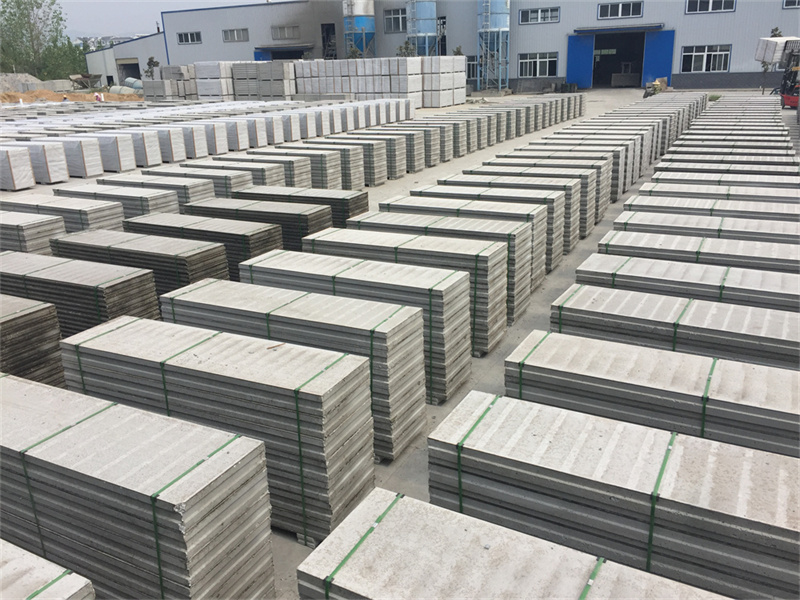
At the heart of this revolution is the EPS sandwich panel. Lightweight, dimensionally accurate, and ready to install, EPS cement sandwich panels have become the material of choice for prefabricated buildings worldwide. From modular housing and site offices to hotels, hospitals, and schools, these panels enable faster, more efficient, and more sustainable construction.
This article explores how EPS sandwich panels are transforming prefabricated construction, examining the advantages, modular design principles, real-world case studies, and logistical benefits that make these panels ideal for modern building methods.
1. Why EPS Panels Are Ideal for Prefabrication1.1 Characteristics That Enable Prefabrication
EPS cement sandwich panels possess several inherent characteristics that make them exceptionally suited for prefabricated construction:
Factory-Ready Characteristics:
| Characteristic | Benefit for Prefabrication |
|-------------------------|-----------------------------------------------|
| Dimensional Accuracy | Factory cut to exact sizes; minimal on-site adjustment |
| Lightweight (55-60 kg/m²)| Easy handling in factory; efficient transport |
| Straight-from-Factory | No plastering, curing, or finishing needed |
| Structural Integrity | Panels serve as both structure and finish |
| Joint System | Tongue-and-groove enables rapid, precise assembly |
| Multi-Functional | Provides insulation, fire resistance, and soundproofing in one step |
1.2 Comparison with Traditional Prefab Materials
Traditional Prefabricated Wall Materials:
| Material | Weight | Insulation | Fire Rating | Finishing Required |
|----------------------|--------------|------------|--------------|-------------------|
| EPS Sandwich Panel | Light | Excellent | A1, 4+ hours | Minimal |
| Steel Cladding | Medium | Poor | A1 | Insulation needed |
| Concrete Panel | Very Heavy | Poor | A1 | Insulation needed |
| SIP (Wood) | Light | Good | Variable | Fire treatment |
| Gypsum Board System | Light | Poor | A2 | Insulation needed |
1.3 The Prefabrication Advantage Matrix
EPS sandwich panels score highly across all criteria relevant to prefabricated construction:
| Criterion | EPS Panel | Steel Cladding | Concrete Panel | SIP Panel |
|------------------------|-----------|----------------|----------------|-----------|
| Weight Efficiency | ★★★★★ | ★★★ | ★ | ★★★★★ |
| Thermal Performance | ★★★★★ | ★★ | ★★ | ★★★★ |
| Fire Resistance | ★★★★★ | ★★★★ | ★★★★★ | ★★ |
| Sound Insulation | ★★★★ | ★★ | ★★★★ | ★★★ |
| Water Resistance | ★★★★★ | ★★★ | ★★★ | ★★ |
| Installation Speed | ★★★★★ | ★★★★ | ★★ | ★★★★★ |
| Cost Effectiveness | ★★★★★ | ★★★ | ★★ | ★★★★ |
2. Fast Construction Advantages2.1 Speed Comparison: EPS Panel vs. Traditional Construction
The speed advantage of EPS sandwich panels in prefabricated construction is dramatic:
Construction Time Comparison (1,000 m² building):
| Construction Method | Foundation | Wall Assembly | Finishing | Total Time |
|------------------------|------------|---------------|-----------|------------|
| Traditional Brick | 2-3 weeks | 8-12 weeks | 4-6 weeks | 14-21 weeks|
| Concrete Frame + Brick | 3-4 weeks | 10-14 weeks | 4-6 weeks | 17-24 weeks|
| Steel Frame + EPS Panel| 2 weeks | 2-3 weeks | 1-2 weeks | 5-7 weeks |
| Fully Prefab + EPS | 1-2 weeks | 1-2 weeks | 1 week | 3-5 weeks |
2.2 Labor Efficiency
EPS sandwich panels dramatically reduce labor requirements:
Labor Hours per 100 m² Wall:
| Task | Traditional Brick | EPS Panel | Savings |
|-----------------------|-------------------|-----------|-----------|
| Material Preparation | 20 hours | 5 hours | 75% |
| Wall Construction | 80 hours | 15 hours | 81% |
| Plastering | 30 hours | 0 hours | 100% |
| Finishing Prep | 15 hours | 5 hours | 67% |
| **Total** | **145 hours** | **25 hours**| **83%** |
2.3 Weather Independence
One of the greatest advantages of prefabricated construction with EPS panels is weather independence:
Traditional Construction Weather Delays:
- Rain stops brick laying and concrete pouring
- Extreme heat limits worker productivity
- Cold weather extends curing times
- Wind affects scaffolding work
EPS Prefab Construction:
- Factory manufacturing is weather-independent
- On-site assembly can proceed in most weather conditions
- No curing time required (unlike concrete or mortar)
- Project schedules become more predictable
3. Modular Design Principles3.1 Panel Dimensions and Modular Coordination
EPS sandwich panels are designed for modular coordination, meaning their dimensions align with standard building modules for efficient design and minimal waste.
Standard Module Dimensions:
| Parameter | Standard Size | Design Implication |
|----------------|------------------|--------------------------------|
| Width | 610 mm | Fits 3M modular grid |
| Length | 2,440 - 4,000 mm | Standard ceiling heights |
| Thickness | 75, 100, 120, 150, 200 mm | Various applications |
Modular Grid Alignment:
- 610mm panel width = 2 × 305mm = 2 × 1M (where M = 100mm basic module)
- Rooms designed in 610mm increments minimize cutting
- Standard door and window openings designed for panel width multiples
3.2 Panel-to-Structure Integration
EPS sandwich panels can be integrated with various structural systems:
Structural System Compatibility:
| Structural System | Panel Integration Method | Typical Applications |
|----------------------|-----------------------------------|----------------------------|
| Light Steel Frame | Screw fixing to studs | Modular housing, offices |
| Heavy Steel Frame | Bolt-on or slide-in systems | Industrial buildings |
| Concrete Frame | Embedded anchors or track systems | Commercial buildings |
| Timber Frame | Screw fixing to studs | Residential, cabins |
| Load-Bearing Panel | Panels carry vertical loads | Low-rise buildings |
3.3 Design Flexibility
Despite being a prefabricated system, EPS panels offer significant design flexibility:
Customization Options:
- Non-standard lengths up to 4 meters
- Custom thicknesses for special applications
- Pre-cut openings for windows and doors
- Pre-installed conduit channels for electrical
- Curved panels for special architectural features
Connection Details:
- Corner panels for clean junctions
- L-shaped panels for column cladding
- U-shaped channels for floor-to-wall connections
- Special profiles for roof-to-wall junctions
4. Real-World Case Studies4.1 Case Study 1: Modular Worker Accommodation
Project Details:
- Location: Mining camp, Western Australia
- Building Type: Worker accommodation modules
- Size: 240 rooms in 20 buildings
- Panel Specification: 100mm EPS sandwich panels
Construction Approach:
- Modules fabricated off-site in production facility
- EPS panels installed during module fabrication
- Complete modules transported to site
- On-site assembly: foundations + module placement + connections
Results:
- Total project time: 12 weeks (vs. 36 weeks traditional)
- Labor cost: 45% lower than traditional construction
- Waste generated: 70% less than conventional methods
- Energy performance: 40% lower HVAC costs
4.2 Case Study 2: Prefabricated Hotel Extension
Project Details:
- Location: Resort hotel, Phuket, Thailand
- Building Type: 3-story hotel extension
- Size: 60 guest rooms, 3,200 m²
- Panel Specification: 100mm EPS panels with tile finish
Construction Approach:
- Existing hotel remained operational during construction
- Steel frame erected on-site
- EPS panels installed as exterior and partition walls
- Minimal noise and disruption to guests
Results:
- Construction completed in 14 weeks
- Hotel maintained 90% occupancy during construction
- Guest complaints about noise: zero
- Project cost: 25% below initial budget
4.3 Case Study 3: Rapid-Response Hospital
Project Details:
- Location: Emergency field hospital, disaster zone
- Building Type: Modular hospital wards
- Size: 200-bed facility, 5,000 m²
- Panel Specification: 150mm EPS panels (fire-rated for hospital)
Construction Approach:
- Pre-designed modular units manufactured in advance
- Flat-pack panels shipped to site
- Assembly by local workforce with minimal training
- Operational in 21 days from site preparation
Results:
- Fully operational facility in 3 weeks
- Met all hospital fire and safety codes
- Withstood subsequent seismic activity (earthquake zone)
- Easily expandable as needs grew
5. Transportation and Logistics Advantages5.1 Transport Efficiency
The lightweight nature of EPS sandwich panels provides significant transportation advantages:
Transport Capacity Comparison:
| Material | Weight per m² | Panels per 20-ton Truck | Wall Area per Truck |
|------------------------|---------------|--------------------------|---------------------|
| EPS Panel (100mm) | 55-60 kg | 330-360 panels (1.5×3m) | 180-200 m² |
| Brick (240mm) | 350-450 kg | Equivalent brick pallets | 40-50 m² |
| Concrete Panel (150mm) | 250-300 kg | 15-20 panels | 30-45 m² |
Transportation Cost Analysis (per 1,000 m² wall):
| Material | Truckloads Required | Transport Cost ($500/truck) | Total Transport Cost |
|--------------------|---------------------|----------------------------|----------------------|
| EPS Panel | 5-6 | $500 | $2,500 - $3,000 |
| Brick | 20-25 | $500 | $10,000 - $12,500 |
| Concrete Panel | 22-33 | $500 | $11,000 - $16,500 |
5.2 Handling Advantages
EPS panels can be handled without heavy equipment in many situations:
Handling Requirements:
| Material | Crane Required | Manual Handling | Scaffolding Needed |
|--------------------|----------------|-----------------|-------------------|
| EPS Panel | Optional | 2-3 workers | Minimal |
| Brick | No | Yes (slow) | Yes |
| Concrete Panel | Required | No | Required |
5.3 Remote Site Accessibility
For construction in remote or difficult-to-access locations, EPS panels offer decisive advantages:
Remote Site Scenarios:
- Mountainous terrain (helicopter transport possible for EPS panels)
- Islands (more material per barge shipment)
- Urban infill sites (limited crane access)
- Sites with weight-restricted access (bridges, culverts)
Case Example:
A mountain resort project in the Swiss Alps required wall materials to be transported by cable car. EPS panels were transported at 4x the rate of equivalent brick material, enabling faster construction and lower transport costs.
Comparison Summary: EPS Panel Prefabrication vs. Traditional Methods| Factor | EPS Panel Prefab | Traditional Brick | Concrete Prefab |
|-----------------------|------------------|-------------------|-----------------|
| Construction Speed | 3-5x faster | Baseline | 2-3x faster |
| Labor Requirement | 20-25% of traditional | Baseline | 40-50% of traditional |
| Weather Sensitivity | Low | High | Medium |
| Transport Efficiency | 4-5x more per truck | Baseline | 0.5x per truck |
| Crane Requirement | Optional | Not needed | Required |
| On-site Waste | < 5% | 10-20% | 5-10% |
| Design Flexibility | High | Very High | Medium |
| Quality Consistency | High (factory) | Variable | High |
| Total Project Cost | 15-30% savings | Baseline | 5-15% savings |
| Energy Performance | Excellent | Poor | Poor |
FAQQ: What types of prefabricated buildings are best suited for EPS sandwich panels?
A: EPS panels are ideal for modular housing, site offices and dormitories, hotels and resorts, hospitals and clinics, schools and educational facilities, industrial buildings, and any project where speed and efficiency are priorities.
Q: Can EPS sandwich panels be used for load-bearing walls in prefabricated buildings?
A: Standard EPS panels are primarily for non-load-bearing partition walls. For load-bearing applications in low-rise prefabricated buildings (up to 3 stories), specially engineered structural EPS panels are available with reinforced cores. Always consult a structural engineer for load-bearing designs.
Q: How do EPS panels connect to steel framing in prefabricated buildings?
A: Panels are typically attached to steel studs using self-drilling screws through the facing boards into the steel framing. The tongue-and-groove edges ensure tight joints between panels. Connection details vary by manufacturer and structural requirements.
Q: What is the maximum building height for EPS panel prefabricated construction?
A: For non-load-bearing applications (partition walls within a structural frame), there is no height limit. For load-bearing EPS panel buildings, practical limits are typically 2-3 stories, depending on panel specifications and local building codes.
Q: Are prefabricated buildings with EPS panels as durable as traditional construction?
A: Yes. EPS panel buildings have a lifespan of 50+ years when properly designed, installed, and maintained. The inorganic materials resist rot, mold, and insect damage that can affect wood-based construction.
Q: How are electrical and plumbing systems installed in EPS panel walls?
A: Panels can be pre-grooved at the factory for electrical conduit runs, or channels can be cut on-site. Switch and outlet boxes can be recessed into the panel. Plumbing is typically run in dedicated service walls or chases.
Q: Can EPS panel buildings be disassembled and relocated?
A: Yes. One of the advantages of prefabricated construction is the potential for disassembly. Panels can be unscrewed from framing and reinstalled at a new location, making EPS panel buildings ideal for temporary structures and re-locatable facilities.
Q: What wind and seismic loads can EPS panel buildings resist?
A: When properly engineered and connected to an appropriate structural system, EPS panel buildings can be designed for any wind or seismic zone. The lightweight nature of EPS panels actually reduces seismic loads on the structure compared to heavy masonry walls.