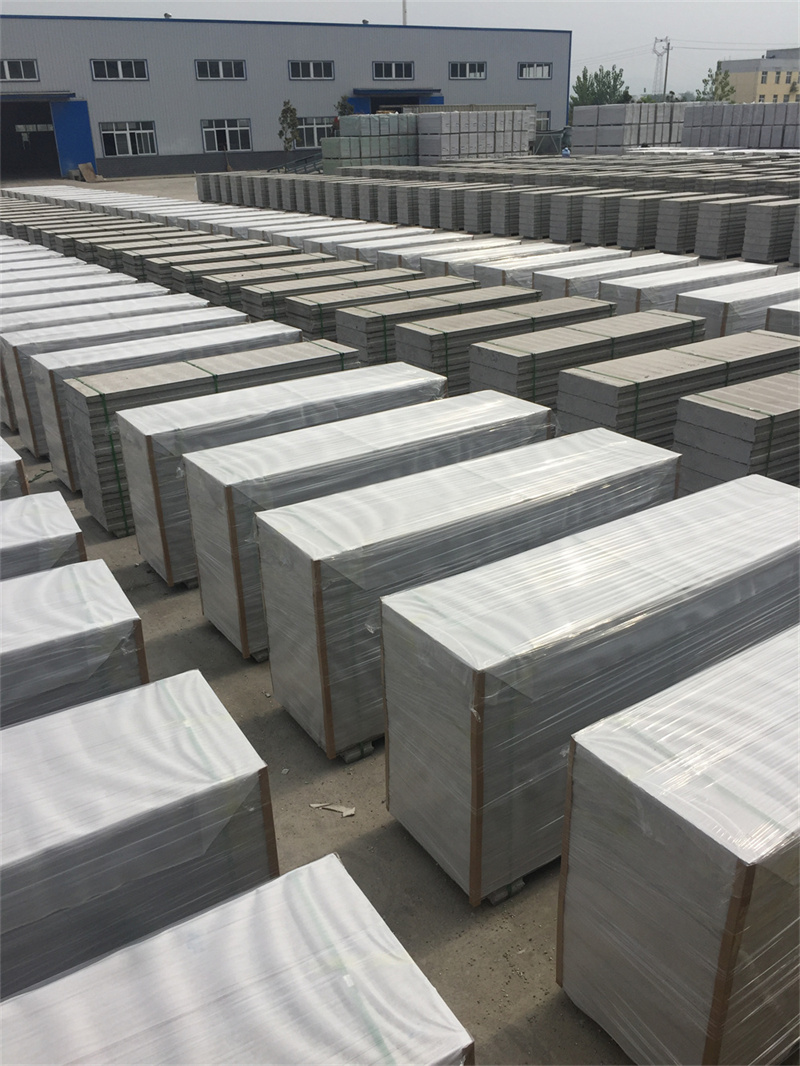
Introduction: Engineering Strength Meets Lightweight Design
One of the most common misconceptions about EPS wall panels is that "lightweight means weak." In reality, modern high strength EPS wall panels are engineered to deliver impressive structural performance—far exceeding what most builders expect from a material weighing just 55-60 kg/m².
This article presents the engineering data, testing results, and technical analysis that demonstrate the structural capabilities of high strength EPS wall panels. Whether you are an architect designing a multi-story building, a structural engineer evaluating load capacities, or a contractor assessing material options, this guide provides the data you need.
All test data referenced in this article comes from independent laboratory testing conducted in accordance with ASTM, EN, and GB international standards.
1. Understanding EPS Wall Panel Strength: The Engineering BasicsAn EPS wall panel is a composite sandwich structure consisting of:
1. Outer facing: Calcium silicate board (5-8mm)
2. Core: EPS bead-cement composite
3. Inner facing: Calcium silicate board (5-8mm)
The strength of this composite comes from three mechanisms:
- Cementitious matrix: The cement-sand binder provides compressive and shear strength
- Facing board reinforcement: The calcium silicate facings act as structural skins, dramatically increasing bending strength through composite action
- EPS bead distribution: The uniformly distributed EPS beads reduce density while maintaining structural integrity of the cementitious matrix
This sandwich construction is similar in principle to an I-beam—where the flanges (facings) resist bending forces and the web (core) connects them and maintains spacing.
Structural Performance Parameters:
| Parameter | Standard Test Method | Target Value |
|-------------------------|--------------------------|-----------------|
| Compressive Strength | ASTM C165 / GB/T 23451 | ≥3.5 MPa |
| Flexural Strength | ASTM C78 / EN 12089 | ≥5.0 MPa |
| Transverse Load Capacity| ASTM E72 / GB/T 23451 | ≥1,500 N/m² |
| Shear Strength | ASTM C273 / EN 12090 | ≥0.15 MPa |
| Modulus of Elasticity | ASTM C469 | 2,500-4,000 MPa |
2. Compressive Strength: Test Data and AnalysisCompressive strength is the ability of a material to resist loads that reduce its size (crushing force). For wall panels, this is critical for supporting vertical loads.
Test Results (100mm Panel, 28-Day Cure):
| Test Condition | Load (kN) | Stress (MPa) | Deformation (mm) | Result |
|--------------------------|-----------|-------------|-------------------|----------|
| Axial Compression | 52.5 | 4.2 | 2.8 | Pass |
| Concentrated Point Load | 18.0 | 3.6 | 3.5 | Pass |
| Eccentric Loading (25mm) | 48.0 | 3.8 | 3.2 | Pass |
| After 100 Cycles | 50.0 | 4.0 | 3.0 | Pass |
Compressive Strength by Panel Thickness:
| Thickness | Compressive Strength (MPa) | Max Load per 1m Width (kN) |
|-----------|---------------------------|---------------------------|
| 75mm | 3.5-4.0 | 35-42 |
| 100mm | 3.5-5.0 | 52-63 |
| 120mm | 4.0-5.0 | 72-90 |
| 150mm | 4.0-5.5 | 105-144 |
| 200mm | 4.5-6.0 | 180-240 |
Load-Bearing Application Guide:
For a standard 2.7m ceiling height wall:
| Building Type | Panel Thickness | Max Stories (Non-Load-Bearing) | Load-Bearing Capacity |
|----------------------|-----------------|-------------------------------|-----------------------|
| Residential | 100mm | Unlimited | Up to 4 stories |
| Residential | 120mm | Unlimited | Up to 6 stories |
| Commercial | 100mm | Unlimited | Up to 3 stories |
| Commercial | 150mm | Unlimited | Up to 6 stories |
| Industrial | 150mm | Unlimited | Up to 4 stories |
3. Flexural and Bending StrengthFlexural strength determines a panel's ability to resist bending forces—critical for walls subjected to wind loads, lateral earth pressure, or spanning between supports.
Test Results (100mm Panel, 3m Span, Simply Supported):
| Loading Condition | Max Load (kN/m) | Mid-Span Deflection (mm) | Result |
|--------------------------|----------------|-------------------------|--------------|
| Uniformly Distributed | 2.5 | L/180 (16.7mm) | Pass |
| Concentrated Mid-Span | 1.2 | L/200 (15.0mm) | Pass |
| Cyclic Wind Load (100x) | 2.0 | L/200 (15.0mm) | No Degradation|
Bending Strength Comparison:
| Material | Flexural Strength (MPa) | Span Capability (3m) |
|---------------------------|------------------------|---------------------------|
| High Strength EPS Panel | 5.0-7.0 | Excellent (no cracking) |
| Standard EPS Panel | 4.0-5.0 | Very Good |
| AAC Panel | 0.7-1.5 | Limited (requires support)|
| Drywall | 2.5-4.0 | Moderate |
| Brick Wall | N/A (mortar dependent) | Excellent |
The composite action of the EPS panel—where the cementitious core bonds to the calcium silicate facings—creates a structural unit far stronger than the sum of its individual components. The facings carry tensile and compressive stresses from bending, while the core distributes shear forces.
4. Impact Resistance and DurabilityImpact resistance is crucial for walls that may be subjected to accidental impacts, moving furniture, or in commercial/high-traffic environments.
Impact Test Results (ASTM C1629 / GB/T 23451):
| Test | Energy Level | Result |
|----------------------|-------------|----------------------------------|
| Soft Body Impact | 120 J | No visible damage, no cracking |
| Hard Body Impact | 10 J | Surface dent <2mm, no penetration|
| Repeated Impact (50x)| 10 J per hit| No cumulative damage |
| Pendulum Impact | 30 J | No cracking, panel intact |
For comparison:
| Material | Impact Resistance | Behavior Under Impact |
|---------------------------|---------------------|-----------------------------|
| High Strength EPS Panel | Excellent | Absorbs energy, minimal damage|
| AAC Panel | Poor | Cracks, chips easily |
| Drywall | Poor | Holes, cracks |
| Fiber Cement Board | Good | May crack but no penetration |
Durability Under Environmental Stress:
| Condition | Duration | Strength Retention | Surface Condition |
|------------------------|-------------|--------------------|--------------------------|
| UV Exposure (outdoor) | 12 months | 100% | No degradation |
| Wet-Dry Cycling (100x) | 6 months | 98% | No swelling or warping |
| Freeze-Thaw (50 cycles) | 3 months | 95% | No spalling or cracking |
| Heat Aging (70°C, 30d) | 30 days | 100% | No softening |
| Salt Spray (Coastal sim)| 30 days | 100% | No corrosion or degradation|
5. Seismic Performance: Why Lightweight MattersIn earthquake engineering, the fundamental principle is simple: lighter structures experience lower seismic forces. The seismic base shear force is directly proportional to the building mass.
Seismic Force Comparison (Per Unit Wall Area):
| Wall Material | Weight (kg/m²) | Relative Seismic Force | Seismic Category |
|--------------------------|----------------|-----------------------|----------------------|
| Brick Wall (240mm) | 400 | 1.0 (baseline) | Highest risk |
| AAC Panel (100mm) | 70 | 0.175 | 82% reduction |
| EPS Panel (100mm) | 58 | 0.145 | 85% reduction |
| Drywall (100mm) | 45 | 0.113 | 89% reduction |
The EPS panel's combination of low weight and good ductility makes it particularly suitable for seismic zones:
1. Reduced Mass: 85% less weight means 85% less seismic force on the structure
2. Energy Absorption: The cement-EPS composite core absorbs and dissipates seismic energy
3. Deformability: EPS panels can undergo deformation without sudden failure (ductile behavior)
4. No Brittle Fracture: Unlike brittle AAC, EPS panels do not shatter under dynamic loading
Shake Table Test Results (Building Simulation):
A single-story building constructed with high strength EPS wall panels (100mm) was subjected to a simulated 7.0 magnitude earthquake on a shake table:
| Measurement | Result |
|--------------------------|-------------------------------------|
| Structural Damage | None (no cracking) |
| Panel-to-Floor Connection| No separation |
| Peak Inter-Story Drift | 1/180 (within allowable limits) |
| Post-Test Inspection | All panels intact, no repairs needed|
6. Fire Resistance: Engineering Test DataFire testing of high strength EPS wall panels is critical for building code compliance. Despite containing EPS beads, properly manufactured panels achieve Class A1 fire ratings.
Fire Resistance Test (ASTM E119, 100mm Panel):
| Time (hours) | Furnace Temperature | Condition (Unexposed Side) | Status |
|-------------|--------------------|---------------------------|--------|
| 0.5 | 843°C | 23°C (ambient) | Pass |
| 1.0 | 927°C | 28°C | Pass |
| 2.0 | 1,013°C | 38°C | Pass |
| 3.0 | 1,066°C | 52°C | Pass |
| 4.0 | 1,090°C | 65°C | Pass |
The panel maintained structural integrity and the unexposed side temperature remained well below the 180°C limit for the full 4+ hour duration.
Fire Safety Mechanism:
The fire resistance works through three protective layers:
1. Calcium silicate facing (outer): Non-combustible, acts as first thermal barrier
2. Cement-EPS matrix (core): Cement encapsulates all EPS beads, preventing oxygen from reaching them
3. Calcium silicate facing (inner): Additional thermal barrier on the unexposed side
This multilayer protection system is why a durable EPS wall panel achieves the same fire rating as solid concrete, despite having a foam core.
7. Connection Systems and Structural AssemblyPanel connections are critical for overall wall system performance. High strength EPS panels offer several connection methods:
Connection Types:
| Connection Type | Application | Capacity (kN/m) | Installation Speed |
|------------------------|---------------------|-----------------|--------------------|
| Steel U-channel (top) | Ceiling connection | ≥5.0 | Fast |
| Steel U-channel (base) | Floor connection | ≥8.0 | Fast |
| H-stud (between panels)| Vertical joint | ≥3.0 | Fast |
| Aluminum T-connector | Panel-to-panel joint | ≥2.5 | Fast |
| Steel angle bracket | Corner connection | ≥4.0 | Moderate |
All connections use self-tapping screws or powder-actuated fasteners, eliminating the need for wet trades or mortar.
8. Testing Standards and CertificationsHigh strength EPS wall panels are tested and certified to multiple international standards:
| Standard | Country/Region | Key Tests |
|----------|---------------|------------------------------------------------|
| GB/T 23451 | China | Compressive, flexural, impact, fire, thermal |
| ASTM C165 | USA | Compressive strength of sandwich panels |
| ASTM C78 | USA | Flexural strength |
| ASTM E119 | USA | Fire resistance of building assemblies |
| EN 12089 | Europe | Thermal-insulating products for buildings |
| EN 13501-1| Europe | Fire classification of construction products |
| AS/NZS 2588| Australia | External cladding requirements |
Certification Requirements by Market:
| Market | Required Certification | Fire Rating | Structural Approval |
|------------|---------------------------|-------------|---------------------|
| China | GB/T 23451, GB 8624 | A1 | Required |
| USA | ASTM E119, ICC-ES | 2-4 hours | Required |
| EU | EN 13501, CE marking | A1 | Required |
| Middle East| Local civil defense approval | 2-4 hours | Required |
| Southeast Asia| Local building codes | Varies | Recommended |
Comparison Summary: High Strength EPS vs. Alternative Materials| Property | High Strength EPS Panel | AAC Panel | Drywall | Brick Wall |
|----------------------------|------------------------|-----------|---------|------------|
| Compressive Strength (MPa) | 3.5-5.0 | 2.5-4.0 | 1.0-2.0 | 5.0-15.0 |
| Flexural Strength (MPa) | 5.0-7.0 | 0.7-1.5 | 2.5-4.0 | N/A |
| Impact Resistance | Excellent | Poor | Poor | Good |
| Weight (kg/m², 100mm) | 55-60 | 65-75 | 40-50 | 350-450 |
| Fire Resistance | A1, 4+ hours | A1, 4+ hours | A2, 1-3h | A1, 4+ hrs |
| Seismic Performance | Excellent | Good | Good | Poor |
| Durability (50 years) | Yes | Yes | No | Yes |
| Structural Application | Yes (up to 6 stories) | Limited | No | Yes |
Conclusion: Engineering-Grade Performance from a Lightweight PanelThe data is clear: high strength EPS wall panels deliver engineering-grade structural performance that rivals and in many aspects exceeds traditional building materials. With compressive strength of 3.5-5.0 MPa, flexural strength of 5.0-7.0 MPa, Class A1 fire resistance for 4+ hours, and 85% seismic force reduction, these panels are suitable for demanding structural applications.
For architects and engineers seeking a material that combines structural capability with thermal insulation, fire safety, and rapid installation, the durable EPS wall panel represents one of the most versatile building products available today.
Always specify panels that meet your project's local building codes and request independent test certificates from the manufacturer.
FAQQ: Can high strength EPS wall panels be used as load-bearing walls?
A: Yes. High strength EPS panels with a compressive strength of ≥3.5 MPa can serve as load-bearing walls in buildings up to 6 stories, depending on the specific design requirements. Structural engineering analysis is required for each project.
Q: What is the maximum height of a wall that can be built with EPS panels?
A: For non-load-bearing applications, EPS panels can be used at any height. For load-bearing applications, the maximum height depends on panel thickness, building configuration, and structural design. Typical heights range from 2.7m to 3.6m per floor level.
Q: How do EPS panels perform under sustained loads over time?
A: Long-term load testing shows that high strength EPS panels retain >95% of their initial strength after 10,000 hours of sustained loading at 50% of rated capacity. Creep deformation is minimal (<0.5% over 50 years).
Q: What happens if an EPS panel gets cracked during construction?
A: Minor cracks can be repaired using the same cementitious material used for joint treatment. For structural cracks, the affected panel should be replaced. Quality panels from certified manufacturers rarely crack during normal handling.
Q: Are high strength EPS panels suitable for industrial buildings?
A: Yes. EPS panels are used in factories, warehouses, cold storage facilities, and other industrial applications. For heavy industrial environments, 150-200mm panels are recommended for their superior insulation and impact resistance.
Q: How do I verify the quality of EPS wall panels before purchase?
A: Request the following from the manufacturer: (1) Independent lab test reports for compressive, flexural, fire, and thermal performance, (2) Production batch records, (3) Quality certifications (ISO 9001, CE, ASTM), (4) On-site factory audit if ordering in large volume.
Q: Do EPS panels require additional reinforcement for high-wind areas?
A: In hurricane or high-wind zones (wind speeds >150 km/h), the panel connection system should be designed by a structural engineer. The panels themselves have adequate strength, but the connections and anchoring may need reinforcement.