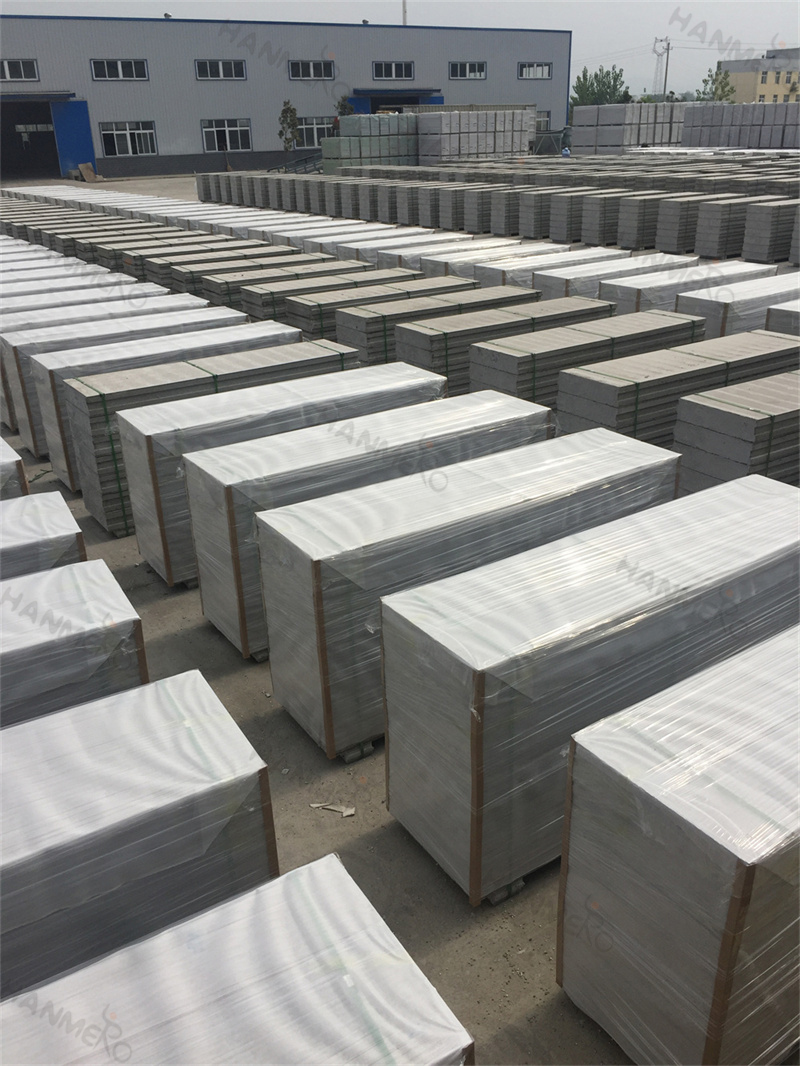
Many contractors and homeowners still hesitate between EPS Cement Sandwich Panel and traditional drywall when choosing interior wall materials. While drywall has been a common choice for decades, it shows obvious shortcomings when you need to do any modification work after installation. The most noticeable difference appears when you try to cut slots for wiring. Ordinary gypsum drywall is soft and brittle, so once you cut a groove into it, the surrounding gypsum material easily crumbles, and the edge of the slot will break apart before you can place the wires inside. Even if you manage to finish the wiring, the repaired slot area will become a weak point on the wall, prone to cracking after a few months of use.
On the contrary, EPS Cement Sandwich Panel is made of cement-based facing instead of gypsum, so the slot edge stays sharp and intact even after you finish cutting. The material does not produce fine gypsum dust that floats in the air for hours, and the cut surface remains firm enough to hold the wire conduit tightly in place. When it comes to wall mount load, the difference is even more obvious. A standard 12mm drywall can only support around 10-15kg per hanging point with special anchors, but EPS Cement Sandwich Panel can support 6-8 times that weight. Drywall also absorbs moisture easily, becoming soft and deformed in humid environments, while EPS Cement Sandwich Panel maintains its full strength and slotting performance even in bathrooms and kitchens. This detailed comparison clearly shows that for projects that require hidden wiring, heavy hanging points and long-term durability, EPS Cement Sandwich Panel is a far more cost-effective choice than ordinary drywall.


