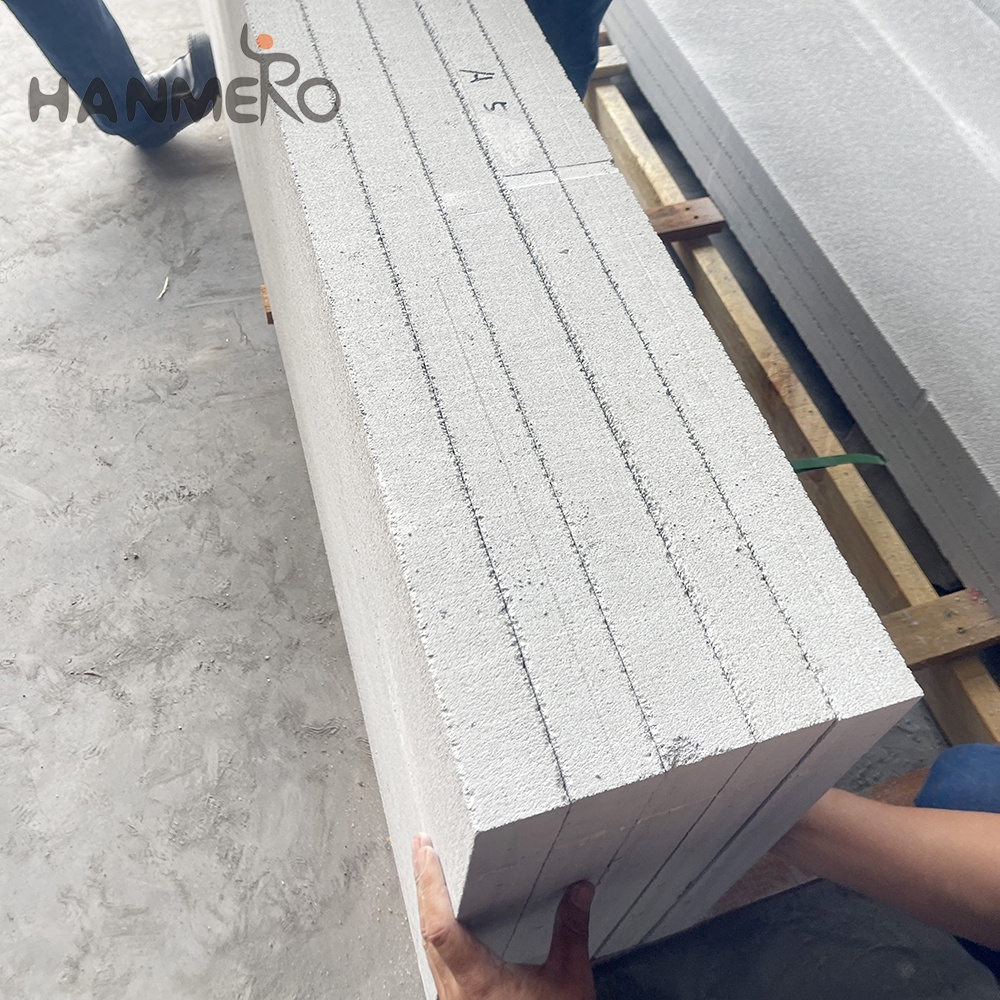
For industrial warehouse operators, every detail of building design directly impacts long-term profitability — and the ALC wall panel has proven to be a game-changing choice that cuts both construction and daily operational expenses. Unlike traditional corrugated metal walls that easily conduct heat, the integrated porous structure of the ALC wall panel delivers a thermal conductivity as low as 0.13 W/(m·K), creating a natural insulated barrier that stabilizes indoor temperatures. For logistics warehouses that store temperature-sensitive goods, using ALC wall panel can reduce the energy consumption of ventilation and cooling systems by 28% during hot summer months, according to field tests conducted in central China.
Impact resistance and long service life make the ALC wall panel perfectly suited for the high-traffic environment of industrial facilities. Forklifts, cargo handling equipment, and frequent material transportation often cause accidental collisions with warehouse walls, but the ALC wall panel’s reinforced internal structure can withstand impact forces of over 15kJ without permanent deformation. Unlike cement brick walls that develop cracks and peeling after 5–8 years of heavy use, the ALC wall panel maintains stable physical performance for more than 50 years, with almost no need for regular repair or maintenance.
Installation flexibility is another major benefit for warehouse renovation projects. Many old industrial parks need to expand or partition large open spaces into separate storage zones, and the ALC wall panel can be installed quickly without heavy foundation modification. A 2000-square-meter warehouse can complete all new partition wall installations in just 7 days, avoiding long periods of business suspension that would cause massive revenue losses. This combination of low cost, high durability, and fast deployment makes the ALC wall panel the top choice for new and renovated industrial warehouse projects.