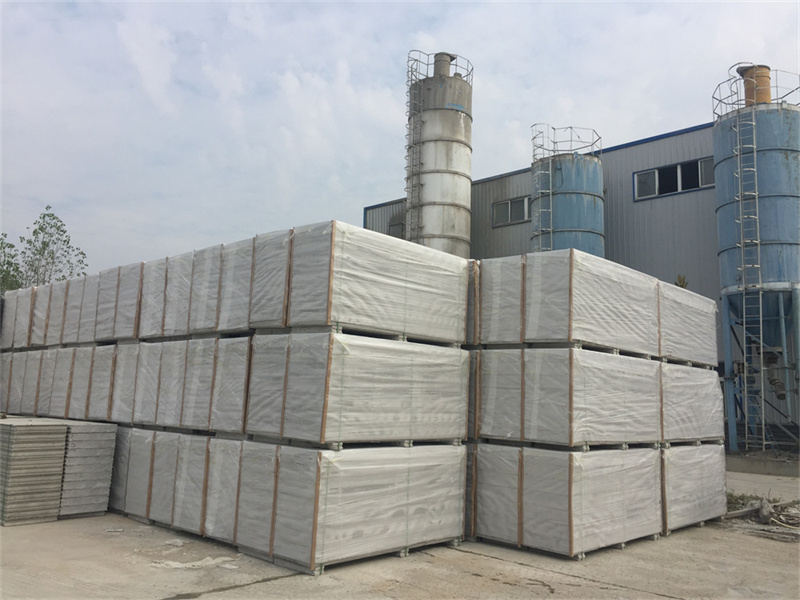
Introduction: The Construction Material Showdown
If you're planning a construction project—whether it's a residential building, commercial complex, or renovation—you've likely faced this question: Should I use traditional brick walls or modern EPS wall panels?
For centuries, brick and concrete block have been the go-to materials for wall construction. But in the past two decades, EPS cement sandwich panels have emerged as a serious competitor, offering compelling advantages in speed, cost, and performance.
This article provides a head-to-head comparison to help you make an informed decision for your next project.
1. Weight Comparison: The Lightweight Advantage
Traditional Brick Wall (240mm):
- Weight: approximately 350-450 kg per square meter
- Requires heavy foundation and structural support
- Transportation costs are high due to weight
- Difficult to handle on upper floors
EPS Wall Panel (100mm):
- Weight: approximately 55-60 kg per square meter
- Only 1/6 to 1/8 the weight of brick wall
- Standard foundation is sufficient
- Easy to transport and handle
Real Impact:
A 10-story building using EPS panels can reduce foundation costs by 20-30% because the structural load is dramatically lower. This is especially important in areas with soft soil or seismic zones.
2. Thickness: Maximizing Usable Space
Traditional Brick Wall:
- Standard thickness: 240mm + 20mm plaster on each side = 280mm total
- For a 100-meter long wall, you lose 28 square meters of floor space
EPS Wall Panel:
- Standard thickness: 100mm (no plaster needed)
- For a 100-meter long wall, you only lose 10 square meters of floor space
Space Savings:
Using EPS panels can increase usable floor area by 4-6% compared to brick walls. In commercial real estate where every square meter counts, this translates to significant additional revenue.
3. Installation Speed: Time is Money
Traditional Brick Wall:
- Skilled mason installs: 5-8 square meters per day
- Requires curing time: 7-14 days before plastering
- Plastering: additional 2-3 days
- Drying time: 3-5 days before painting
- Total process: 15-25 days
EPS Wall Panel:
- 3-person team installs: 50-80 square meters per day
- No curing time required
- No plastering needed (smooth surface ready for paint)
- Immediate finishing possible
- Total process: 1 day
Construction Timeline Impact:
For a 5,000 square meter hotel project, using EPS panels can reduce the construction schedule by 2-3 months. This means earlier occupancy, lower financing costs, and faster return on investment.
4. Fire Resistance: Safety First
Traditional Brick Wall:
- Fire rating: Class A1 (non-combustible)
- Excellent fire resistance
- Does not produce toxic fumes
EPS Wall Panel:
- Fire rating: Class A1 (non-combustible)
- Calcium silicate facing boards are non-combustible
- EPS core is self-extinguishing and enclosed in cement matrix
- Tested to withstand 4+ hours of direct flame
Result: Both materials offer excellent fire safety. EPS panels are NOT the same as pure EPS foam boards—the cement encapsulation makes them completely safe for building applications.
5. Sound Insulation: Creating Quiet Spaces
Traditional Brick Wall (240mm):
- Sound insulation: approximately 45-48 dB
- Good for most applications
EPS Wall Panel (100mm):
- Sound insulation: approximately 42 dB
- 150mm panel achieves 48 dB (matching brick wall)
The Science:
The multi-layer sandwich structure of EPS panels is effective at blocking different sound frequencies. While brick walls have excellent mass-based sound blocking, EPS panels achieve comparable results through their composite structure—at a fraction of the weight.
6. Thermal Insulation: Energy Efficiency
Traditional Brick Wall:
- Thermal conductivity: approximately 0.81 W/m·K
- Poor insulation; requires additional insulation layer
- Higher heating and cooling costs
EPS Wall Panel:
- Thermal conductivity: 0.072 W/m·K (100mm panel)
- Approximately 11 times better thermal performance
- A 100mm EPS panel equals a 600mm brick wall in insulation
Energy Savings:
Buildings using EPS panels can reduce heating and cooling costs by 30-50%. This is a critical advantage in extreme climates—hot summers in the Middle East or cold winters in Northern Europe.
7. Water Resistance: Moisture Protection
Traditional Brick Wall:
- Absorbs moisture; requires waterproofing treatment
- Prone to dampness in bathrooms and basements
- Can develop mold issues over time
EPS Wall Panel:
- Water absorption rate: less than 8%
- Cement-based facing is naturally water-resistant
- Suitable for bathrooms, kitchens, and exterior walls
- No mold issues when properly installed
8. Cost Analysis: The Bottom Line
Material Cost (per square meter):
- Traditional brick + mortar + plaster: $15-25
- EPS panel: $18-30
At first glance, EPS panels seem more expensive. But consider the total installed cost:
Total Installed Cost:
- Traditional brick (including labor, plastering, curing time): $35-50/m²
- EPS panel (including labor, joint treatment): $28-40/m²
Additional Savings with EPS Panels:
- Smaller foundation: 10-20% cost reduction
- Faster project completion: lower financing costs
- No plastering: save $5-10/m²
- Less structural steel: 10-15% reduction
Net Result:
Total project cost is typically 15-25% lower when using EPS panels compared to traditional brick construction.
9. Environmental Impact: Sustainable Building
Traditional Brick Wall:
- High embodied energy in brick production
- Cement production generates CO2
- More construction waste
- No recycling value
EPS Wall Panel:
- Lower cement content per wall area
- EPS can be sourced from recycled materials
- Precise dimensions reduce on-site waste
- Energy savings over building lifetime
- Contributes to LEED/BREEAM certification
10. Application Scenarios: When to Choose Each
Choose Traditional Brick Wall When:
- Building codes specifically require masonry
- Local labor is experienced with brick but unfamiliar with panels
- Project has no timeline pressure
- You need very high compressive strength walls
Choose EPS Wall Panel When:
- Speed of construction is important
- Building height requires weight reduction
- Energy efficiency is a priority
- Labor costs are high
- Renovating existing structures (weight constraints)
- Building in seismic zones
- Project budget is tight
Conclusion: The Verdict
Both materials have their place in modern construction. Traditional brick walls remain a proven, durable choice with centuries of track record. However, EPS wall panels offer compelling advantages for most contemporary projects:
- 80% lighter
- 60% thinner
- 10 times faster to install
- 11 times better thermal insulation
- 15-25% lower total cost
- More environmentally friendly
For developers, contractors, and building owners focused on efficiency, cost-effectiveness, and sustainability, EPS wall panels represent the future of construction.
Ready to learn more? Contact Hanmero for free samples and technical specifications.
FAQ
Q: Can EPS panels be used for load-bearing walls?
A: Yes, depending on thickness and structural design. Consult with a structural engineer for load-bearing applications. For standard interior partitions, EPS panels are fully suitable.
Q: Do EPS panels require special maintenance?
A: No. Once installed and finished, EPS panels require the same maintenance as any other wall surface. The cement-based surface is durable and long-lasting.
Q: Can I hang heavy items on EPS walls?
A: Yes. The solid cement core allows you to use standard expansion bolts. Single-point hanging strength exceeds 50 kg, suitable for TVs, air conditioners, and cabinets.
Q: Are EPS panels approved by building codes?
A: Yes. EPS cement sandwich panels are certified under GB/T 23451 (China), CE (Europe), and meet ASTM standards. Always check local building codes for specific requirements.
Q: How long do EPS panels last?
A: With proper installation, EPS panels have a service life of 50+ years, comparable to traditional masonry.


