Introduction: Addressing the Fire Safety Concern
When people hear "EPS" (Expanded Polystyrene), they often think of white foam that melts and burns easily. So it's natural to ask: Are EPS cement sandwich panels really fireproof?
The short answer: Yes, they are. EPS cement sandwich panels achieve a Class A1 fire rating—the highest fire safety classification—making them completely safe for building applications.
This article explains the science behind the fireproof performance, how testing is conducted, and why EPS panels are different from pure foam boards.
1. Understanding Fire RatingsFire ratings classify building materials based on their combustibility and fire resistance. The key standards include:
China GB8624 Classification:
- A1: Non-combustible (highest rating)
- A2: Limited combustibility
- B1: Difficult to ignite
- B2: Combustible
- B3: Highly combustible
European EN 13501-1 Classification:
- A1: Non-combustible
- A2: Limited combustibility
- B-F: Various levels of combustibility
Hanmero EPS Cement Sandwich Panels:
- Classification: A1 (Non-combustible)
- Tested and certified by authorized laboratories
- Fire resistance duration: 4+ hours
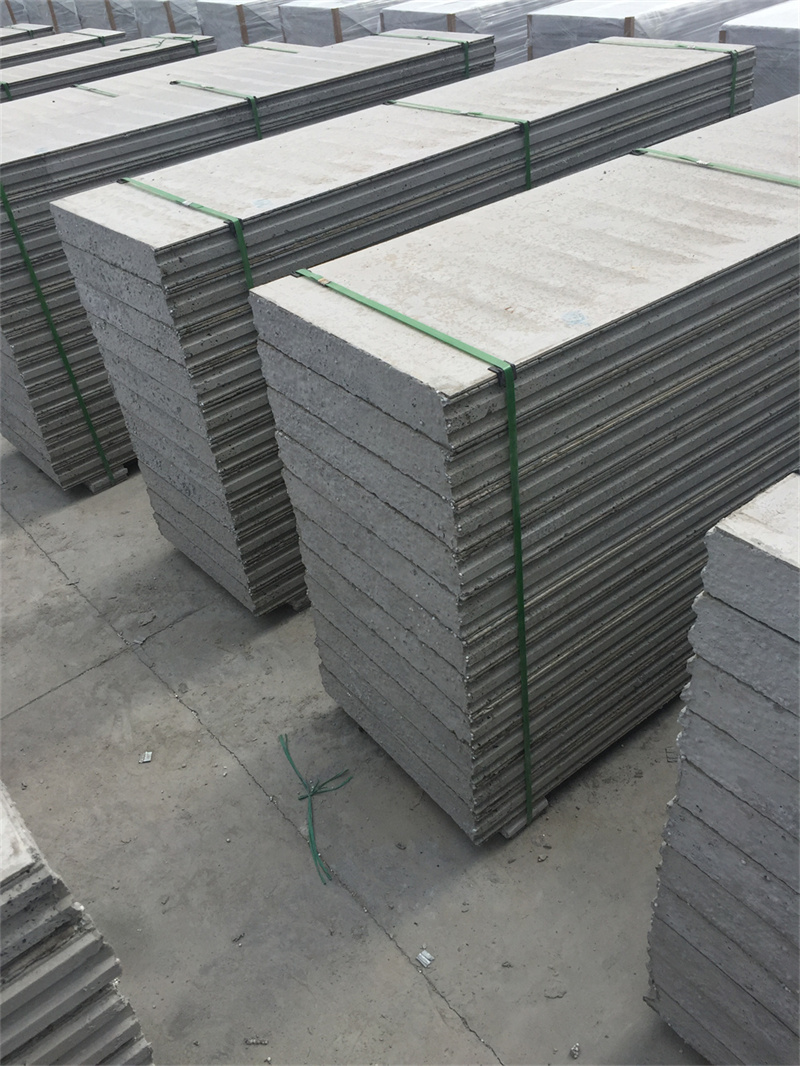
2. Why EPS Panels Are Fireproof: The ScienceThe fireproof performance comes from the sandwich structure:
Layer 1: Calcium Silicate Board (Facing)
- Made from cement, silica, and cellulose fiber
- Does not burn under any conditions
- Acts as a fire barrier protecting the core
- Thickness: 5mm per side
Layer 2: Cement-Bonded Core
- EPS beads (expanded polystyrene) mixed with cement and sand
- EPS content: approximately 60-70% by volume
- Cement content: approximately 30-40%
- The cement completely encapsulates each EPS bead
The Critical Difference:
In pure EPS foam boards, the polystyrene is exposed to air and can burn. In EPS cement sandwich panels, every EPS bead is surrounded by non-combustible cement. Even if exposed to extreme heat, the cement shell prevents oxygen from reaching the EPS, making combustion impossible.
3. Fire Testing: How It WorksStandard fire tests for wall panels include:
Test 1: Non-Combustibility Test (GB/T 5464)
- Sample is placed in a furnace at 750°C
- Material must not ignite or produce significant heat
- Result: EPS cement panel passes with no ignition
Test 2: Fire Resistance Test (GB/T 9978)
- Full-size panel exposed to standard fire curve
- Temperature reaches over 1000°C within 30 minutes
- Panel must maintain integrity and insulation
- Result: 100mm EPS panel withstands 4+ hours
Test 3: Surface Burning Test (GB/T 8626)
- Flame applied directly to surface for 15-30 seconds
- Measures flame spread and after-flame time
- Result: No flame spread, self-extinguishing immediately
4. What Happens When Fire Hits an EPS PanelScenario: Direct flame exposure at 1000°C
Minutes 0-30:
- Surface temperature rises rapidly
- Calcium silicate board remains intact
- No smoke, no flame, no ignition
Minutes 30-60:
- Prolonged heat exposure
- Board may show surface cracking
- Core remains structurally sound
- No toxic gas emission
Minutes 60-240:
- Extended fire exposure
- Panel maintains structural integrity
- Fire does not spread to other areas
- Provides valuable evacuation time
After Fire:
- Damaged section can be replaced
- Adjacent panels remain usable
- No hidden fire damage inside walls (unlike timber)
5. EPS Panel vs. Other Wall Materials: Fire Comparison| Material | Fire Rating | Fire Resistance | Smoke Emission |
|--------------------------|------------ |-----------------|--------------------|
| EPS Cement Panel | A1 | 4+ hours | Minimal |
| Traditional Brick | A1 | 4+ hours | None |
| Drywall (Gypsum) | A2 | 1-2 hours | Low |
| Pure EPS Foam Board | B2-B3 | < 15 minutes | High |
| Timber | B2-C | < 30 minutes | Very High |
| PVC Panel | B1-B2 | < 1 hour | Toxic |
Key Insight:
EPS cement sandwich panels match the fire performance of traditional brick walls while offering superior speed and weight advantages.
6. Addressing Common ConcernsConcern 1: "I've seen EPS foam burn—how can this be safe?"
Answer: Pure EPS foam and EPS cement panels are completely different. In panels, EPS beads are trapped inside cement, preventing combustion. It's like comparing raw flour (flammable) to bread (doesn't burn easily).
Concern 2: "Does the EPS melt inside the panel during a fire?"
Answer: At very high temperatures (above 200°C), the EPS may soften or decompose, but the cement matrix maintains structural integrity. The facing boards continue to protect the wall.
Concern 3: "Do EPS panels produce toxic smoke?"
Answer: No. The calcium silicate facings produce no smoke. The cement-encapsulated EPS produces minimal smoke compared to pure foam or plastic materials.
Concern 4: "Can I use EPS panels in fire-sensitive areas like kitchens?"
Answer: Absolutely. EPS panels are ideal for kitchens, boiler rooms, and areas with fire risk. They provide better fire protection than many alternative materials.
7. Certifications and StandardsHanmero EPS cement sandwich panels meet the following fire safety standards:
- GB8624 A1 (China National Fire Safety Standard)
- GB/T 23451 (Technical specification for lightweight partition panels)
- GB/T 9978 (Fire resistance test for building elements)
- CE Certification (European Conformity)
- ISO 9001:2015 (Quality Management System)
- SGS Testing Reports
Documentation:
Fire test reports are available upon request. For large projects, Hanmero can provide samples for independent third-party testing.
8. Best Practices for Fire-Safe InstallationEven with fireproof panels, proper installation matters:
1. Joint Treatment
- Fill all gaps between panels with fire-resistant mortar
- Use joint tape approved for fire applications
- Avoid combustible sealants
2. Electrical Installation
- Use proper conduits for electrical wiring
- Do not overload circuits inside walls
- Follow local electrical codes
3. Fire Stops
- Install fire stops at floor and ceiling connections
- Use non-combustible materials for openings
- Seal all penetrations properly
4. Surface Finishes
- Choose fire-rated paints and coatings
- Avoid highly combustible wall coverings
- Maintain fire rating of the complete wall assembly
9. Fire Safety in Different ApplicationsResidential Buildings:
- EPS panels provide safe, fire-resistant interior and exterior walls
- Meet residential building code requirements worldwide
- Provide occupants time to evacuate in case of fire
Commercial Buildings:
- Offices, hotels, hospitals benefit from 4-hour fire rating
- Lower insurance premiums in many jurisdictions
- Meet strict commercial building fire codes
Industrial Facilities:
- Suitable for warehouses, factories, and workshops
- Resist fire from industrial processes
- Protect valuable equipment and inventory
High-Rise Buildings:
- Lightweight panels reduce structural load
- Fire rating meets high-rise building requirements
- Safe evacuation routes maintained during fire
10. Real-World Fire Safety RecordEPS cement sandwich panels have been used in construction for over 20 years with an excellent fire safety record:
- No documented cases of fire spread attributed to EPS cement panels
- Used in thousands of hotels, hospitals, and schools worldwide
- Approved for use in fire-sensitive applications globally
Hanmero panels have been installed in:
- Over 90 countries across 6 continents
- Projects ranging from single homes to 50-story buildings
- Environments from tropical to arctic conditions
Conclusion: Safety You Can TrustEPS cement sandwich panels are not just fire-resistant—they are genuinely fireproof, achieving the highest A1 non-combustible rating. The key is the sandwich structure: non-combustible cement facings protect a cement-encapsulated core.
When choosing wall materials for your project, fire safety should never be compromised. With Hanmero EPS panels, you get:
- Class A1 non-combustible certification
- 4+ hours fire resistance
- Minimal smoke emission
- Peace of mind for occupants and owners
Don't compromise on safety. Choose fireproof EPS wall panels for your next project.
FAQQ: What is the fire rating of EPS cement sandwich panels?
A: Class A1 (non-combustible) under GB8624 and EN 13501-1 standards—the highest fire safety classification.
Q: How long can EPS panels resist fire?
A: Standard 100mm panels withstand 4+ hours of fire exposure while maintaining structural integrity.
Q: Do EPS panels produce toxic smoke during fire?
A: No. The cement-based construction produces minimal smoke compared to foam or plastic materials.
Q: Can EPS panels be used in fire-rated walls?
A: Yes. EPS panels are approved for 2-hour and 4-hour fire-rated wall assemblies.
Q: Are EPS panels safe for kitchens and boiler rooms?
A: Absolutely. Their A1 fire rating makes them ideal for areas with elevated fire risk.
Q: Do I need additional fire protection for EPS panels?
A: No additional fire protection is required. The panels themselves are non-combustible.