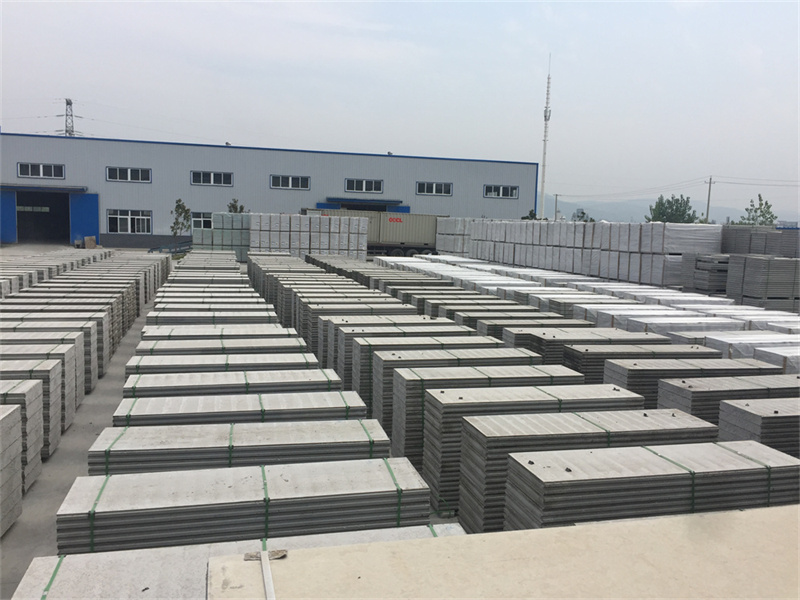
Introduction: Why EPS Wall Panels Are Transforming Construction
The global construction industry is undergoing a transformation. Traditional building methods—brick laying, concrete pouring, and extensive plastering—are giving way to faster, more efficient alternatives. At the forefront of this revolution is the EPS cement sandwich panel.
But what makes this material so popular among developers, contractors, and architects worldwide? In this article, we explore the top 10 benefits of using EPS wall panels for your building project.
Benefit 1: Lightweight ConstructionWeight Comparison:
- Traditional brick wall (240mm): 350-450 kg/m²
- EPS wall panel (100mm): 55-60 kg/m²
- Weight reduction: 80-85%
Why This Matters:
1. Smaller Foundations
The dramatic weight reduction means your building requires smaller footings, less concrete, and fewer steel reinforcements. For multi-story buildings, this translates to significant cost savings.
2. Easier Transportation
More panels can be loaded per truck, reducing transportation costs. A single truck can carry panels for 200+ square meters of wall.
3. Reduced Crane Requirements
Most panels can be handled by 2-3 workers without heavy lifting equipment. This is especially valuable for renovation projects in buildings where cranes cannot access.
4. Seismic Safety
Lighter buildings perform better during earthquakes. The reduced mass means lower seismic forces on the structure.
Real-World Impact:
A 10-story residential building using EPS panels can reduce foundation concrete by 15-20% and structural steel by 10-15%.
Benefit 2: Rapid InstallationInstallation Speed Comparison:
- Brick wall: 5-8 m² per day per mason
- EPS panel: 50-80 m² per day per 3-person team
- Speed increase: 10 times faster
Time Savings Breakdown:
Traditional Brick Process:
- Laying bricks: 10-14 days for 100m²
- Curing time: 7 days
- Plastering: 3-5 days
- Drying: 5-7 days
- Total: 25-33 days
EPS Panel Process:
- Panel installation: 1-2 days for 100m²
- Joint treatment: 1-2 days
- Ready for finishing: immediate
- Total: 2-4 days
Financial Benefits:
- Reduced labor costs
- Shorter project duration
- Lower financing/interest costs
- Earlier occupancy and revenue generation
Benefit 3: Superior Fire ResistanceFire Performance:
- Classification: Class A1 (Non-combustible)
- Fire resistance: 4+ hours
- No flame spread
- Minimal smoke emission
How It Works:
The calcium silicate facing boards are inherently non-combustible. The EPS core is fully encapsulated in cement, preventing oxygen from reaching the foam beads. Even under direct flame exposure, the panel maintains structural integrity.
Applications:
- Fire-rated walls in commercial buildings
- Hotel room partitions
- Hospital walls
- Industrial facilities
- Any building where fire safety is critical
Benefit 4: Excellent Thermal InsulationThermal Performance:
- Thermal conductivity: 0.072 W/m·K (100mm panel)
- 11 times better than brick (0.81 W/m·K)
- A 100mm EPS panel equals 600mm brick wall in insulation
Energy Savings:
Buildings constructed with EPS panels typically see:
- 30-50% reduction in heating costs
- 30-40% reduction in cooling costs
- Faster temperature stabilization
- More comfortable indoor environment
Ideal Applications:
- Hot climates (Middle East, Southeast Asia, Africa)
- Cold climates (Northern Europe, Russia, Canada)
- High-altitude locations
- Energy-efficient building projects
- Green building certifications (LEED, BREEAM)
Benefit 5: Outstanding Sound InsulationSound Reduction Performance:
- 75mm panel: 38 dB
- 100mm panel: 42 dB
- 150mm panel: 48 dB
- 200mm panel: 52 dB
Comparison with Traditional Walls:
- Standard 240mm brick wall: 45-48 dB
- Drywall with insulation: 35-45 dB
- EPS panel (150mm): 48 dB (matches brick at 1/4 the weight)
How It Works:
The multi-layer sandwich structure—dense facing boards with a cement-EPS composite core—is highly effective at blocking sound transmission across different frequencies.
Best Applications:
- Hotel room partitions
- Office partition walls
- Hospital walls
- Apartment walls
- Conference rooms
- Recording studios (with thicker panels)
Benefit 6: Water and Moisture ResistanceWaterproof Properties:
- Water absorption: Less than 8%
- Cement-based facing is inherently water-resistant
- No swelling or deformation when wet
- Suitable for humid environments
Where This Matters:
- Bathroom walls
- Kitchen partitions
- Basement walls
- Exterior walls
- Coastal and tropical buildings
- Swimming pool facilities
Advantage Over Drywall:
Unlike gypsum drywall, which weakens and disintegrates when wet, EPS panels maintain their structural integrity even after prolonged water exposure.
Benefit 7: Space EfficiencyThickness Comparison:
- Traditional brick wall: 240mm + 20mm plaster each side = 280mm
- EPS wall panel: 100mm (no plaster needed)
Space Savings Calculation:
For a 100-meter long wall:
- Brick wall: 28 square meters lost
- EPS panel: 10 square meters lost
- Space saved: 18 square meters
In a 100-room hotel, this could mean:
- 4-6% more usable floor space
- Additional rooms in the same footprint
- Higher revenue potential
Benefit 8: Cost EffectivenessInitial Material Cost:
- EPS panels may cost 10-20% more per square meter than brick material
Total Installed Cost Comparison:
- Brick wall (material + labor + plastering): $35-50/m²
- EPS panel (material + labor + joint treatment): $28-40/m²
- Savings: 15-30%
Additional Cost Savings:
- Smaller foundation: 10-20% reduction
- Less structural steel: 10-15% reduction
- Reduced labor: 50-70% fewer man-hours
- Faster project: Lower financing costs
- No plastering: Save $5-10/m²
Long-Term Savings:
- Lower energy bills: 30-50% reduction
- Minimal maintenance
- 50+ year lifespan
- Higher property value for energy-efficient buildings
Benefit 9: Environmental SustainabilityGreen Building Advantages:
1. Lower Embodied Energy
Less cement and steel per square meter of wall reduces the carbon footprint of construction.
2. Reduced Construction Waste
Factory-precise dimensions mean minimal on-site cutting and waste. EPS panels can also be reused in renovation projects.
3. Energy Efficiency
Buildings with EPS panels consume 30-50% less energy for heating and cooling over their lifetime.
4. Recyclable Components
EPS beads can be manufactured from recycled materials. At end-of-life, panels can be processed for material recovery.
5. No Harmful Emissions
EPS panels contain:
- Zero formaldehyde
- Zero asbestos
- Zero radioactive substances
- No VOC emissions
Green Certification:
EPS panels contribute to LEED, BREEAM, and other green building certification programs.
Benefit 10: Versatility and FlexibilityApplications:
- Interior partition walls
- Exterior walls
- Prefabricated buildings
- Modular housing
- Renovations and additions
- Temporary structures
Customization Options:
- Thickness: 75mm to 200mm
- Length: Up to 4 meters
- Special sizes available
- Surface can be painted, tiled, or covered
Renovation Advantages:
- Lightweight panels don't overload existing structures
- Fast installation minimizes disruption
- Clean, dry construction
- Ideal for adding floors or rooms to existing buildings
Comparison Summary| Benefit | EPS Panel | Brick Wall | Drywall |
|----------------------|-----------|------------|---------|
| Weight | Lightest | Heaviest | Light |
| Installation Speed | Fastest | Slowest | Fast |
| Fire Rating | A1 | A1 | A2 |
| Thermal Insulation | Excellent | Poor | Poor |
| Sound Insulation | Excellent | Good | Average |
| Water Resistance | Excellent | Good | Poor |
| Space Efficiency | Best | Poor | Good |
| Cost Effectiveness | Best | Average | Good |
| Environmental Impact | Low | High | Medium |
Conclusion: The Smart Choice for Modern ConstructionEPS wall panels offer a compelling combination of benefits that traditional materials cannot match. From dramatic weight reduction and faster installation to superior fire safety and energy efficiency, these panels address the key challenges facing modern construction.
Whether you're building a hotel, hospital, office complex, or residential project, EPS panels deliver:
- Faster project completion
- Lower total costs
- Better building performance
- Environmental sustainability
The construction industry is evolving. Make the smart choice for your next project—choose EPS wall panels.
FAQQ: Are EPS panels suitable for all building types?
A: EPS panels are suitable for most residential, commercial, and industrial buildings. For load-bearing applications, consult with a structural engineer.
Q: How long do EPS panels last?
A: With proper installation, EPS panels have a lifespan of 50+ years, comparable to traditional masonry.
Q: Do EPS panels require special maintenance?
A: No. EPS panels require the same maintenance as any wall surface—regular cleaning and periodic painting if desired.
Q: Can EPS panels be used in earthquake zones?
A: Yes. Their lightweight nature actually improves seismic performance compared to heavy masonry walls.
Q: Are EPS panels more expensive than traditional materials?
A: Material cost may be slightly higher, but total installed cost is typically 15-30% lower due to faster installation and reduced labor.