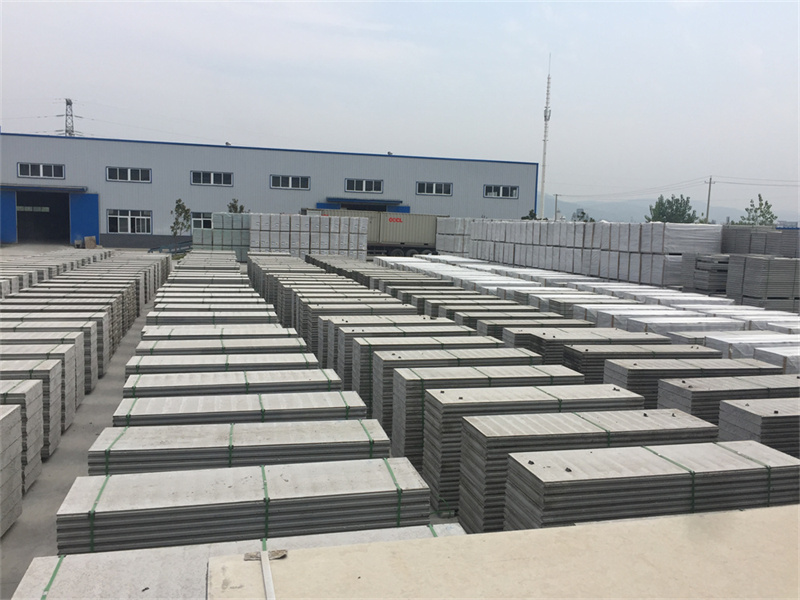
When it comes to modern building and renovation, finding a material that balances efficiency, sustainability, cost-effectiveness, and ease of installation can feel like chasing a unicorn. But if you look closely at the walls and roofs of modern warehouses, cold storage facilities, and prefab homes, you’ll find the ultimate all-rounder: the EPS sandwich panel.
Today, we are diving deep into what makes the EPS sandwich panel a go-to choice for green construction and why it might just be the perfect fit for your next project.
At its core, an EPS sandwich panel is a three-layered composite building material that mimics—you guessed it—a sandwich.
The Outer Skins (The Bread): Two layers of high-strength, galvanized, or pre-painted steel sheets. These provide structural rigidity, weather resistance, and a sleek aesthetic finish.
The Insulating Core (The Filling): EPS (Expanded Polystyrene), a lightweight, rigid plastic foam composed of 98% air trapped within a cellular structure.
Using high-strength adhesives, these layers are bonded together under intense pressure on a continuous production line, creating a single, incredibly strong composite panel.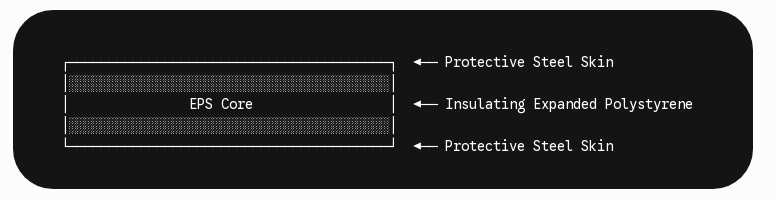
Because EPS is mostly trapped air (which is a terrible conductor of heat), it acts as an outstanding thermal barrier. Using EPS sandwich panels for walls and roofing prevents outdoor heat from entering in the summer and traps warmth inside during the winter.
The Result: Massive savings on HVAC energy consumption and lower electricity bills.
Compared to traditional brick-and-mortar or concrete construction, EPS sandwich panels are incredibly lightweight. This offers two major perks:
Lower Transport Costs: More panels can be shipped in a single truckload.
Rapid Assembly: Designed with a smart tongue-and-groove interlocking system, these panels can be fitted together like building blocks, slashing construction time by up to 50%.
EPS foam is highly hydrophobic, meaning it does not readily absorb water. This prevents the panels from harboring mold, mildew, or rot, and ensures that the insulation value doesn't degrade over time due to humidity.
While other core materials like Polyurethane (PU) or Rockwool offer great performance, they often come with a premium price tag. The EPS sandwich panel delivers excellent insulation and structural integrity at a fraction of the cost, making it the most budget-friendly premium choice on the market.
Thanks to their versatility, you can spot EPS sandwich panels across a wide variety of industries:
|
Why It’s the Perfect Choice | |
| Industrial Warehouses & Factories | Allows for large-span structures to be built and operational in record time. | |
| Cold Storage & Cleanrooms | Ideal for strict temperature-controlled environments where thermal leaks cannot be tolerated. | |
| Prefab & Modular Homes | Perfect for mobile cabins, site offices, and eco-friendly affordable housing. | |
| Interior Partitioning & Ceilings | Provides a clean, smooth surface with sound-dampening properties without taking up valuable floor space. |
If you are considering EPS sandwich panels for your project, keep these technical specs in mind:
Fire Retardancy: While standard polystyrene is flammable, modern construction utilizes fire-retardant EPS (Class B1 or B2). Always specify flame-retardant cores for safety compliance.
Steel Thickness: Depending on the load-bearing requirements, outer steel skins typically range from $0.3\text{ mm}$ to $0.8\text{ mm}$.
Core Density: Higher density means better structural strength and slightly better insulation. Standard densities range from $8\text{ kg/m}^3$ to $20\text{ kg/m}^3$.
In an era where fast, eco-friendly, and cost-effective building solutions are more critical than ever, the EPS sandwich panel checks all the right boxes. Whether you are scaling up a massive commercial fulfillment center or designing a sleek, minimalist tiny home, it remains one of the smartest material investments you can make.
Are you planning to use EPS sandwich panels for your upcoming build? What challenges are you trying to solve? Let us know in the comments below!


